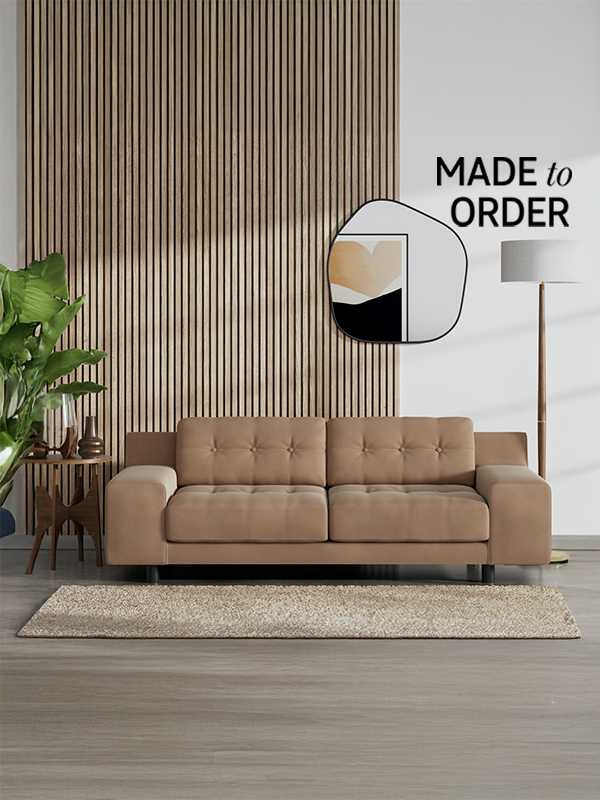
Sofa beds that work day and night
A sofa bed gives you seating every day and a spare bed when you need it. Choose one based on your space, how often it will be used for sleeping, and how much effort the switch takes.
Sofa bed types, explained
- Chair beds: Seats one person and fit alcoves or small spaces. Check the sleep area is long enough for the tallest person who may use it.
- Two‑seater sofa beds: Seats two people and often open to a small‑double‑style area. Check open width and length if used by two people.
- Three‑seater sofa beds: Seats three people, offer more lounge room, and convert to a double‑style area. Measure the full open footprint for clearance.
- Corner sofa beds: Maximise seating with a chaise (a long seat section). Make sure the chaise side suits your layout and routes remain clear when open.
- Pull‑out or roll‑out: A hidden frame slides forward while cushions may stay in place. Leave front clearance so you have room to set it out.
- Clic‑clac: The back drops flat in one move. It has a firmer, more even feel.
- Fold‑down cushions: Seat sections flip to form the sleep surface. Check the padding feel if stays are longer than one night.
- Storage sofa beds: Built‑in space holds bedding. Check how it opens and the usable capacity.
What will you use it for most?
If it is for occasional overnight use:
- Choose a one move design to reduce steps when switching. Clic‑clac styles (a back that drops flat in one move) or pull‑out styles (a frame that slides forward) involve fewer steps.
If it is for multi‑night stays or longer:
- Prioritise support and padding for better rest. Read the mattress or padding details and, if possible, test lying on the open surface.
If it will be your primary seating during the day:
- Prioritise seat comfort if you will sit upright for longer periods. Compare seat depth, firmness, back height, and arm support. The sleep surface can come second.
If space is compact:
- Choose chair beds or compact two‑seaters. Confirm the extended length will not block doors, storage, radiators, heaters, vents, or clear routes through the space.
If storage is limited:
- Look for built‑in bedding space that suits your layout. Check it can take pillows plus a folded duvet.
A few more things to consider
Comfort versus switching effort:
- If it is used for overnight stays often, support matters more than a single step switch. Thicker padding or a built‑in mattress can help.
Footprint versus seating:
- Smaller sofas and chair beds help keep routes clear. Larger sizes give more daytime seating but need careful open length checks.
Storage versus weight and size:
- Built‑in storage saves cupboard space. It can add bulk, so confirm it still passes through doorways and around stairs.
Fabric look versus upkeep:
- Everyday weaves hide marks and clean more easily. Plush fabrics show marks and need gentler care.
What to measure and check
Space and access:
- Measure closed and fully open length and width
- Mark the open footprint on the floor with tape to test walkways, turning space, and door swings
- Compare packaged dimensions to your narrowest doorway, stair turns, or lift
Opening and setup effort:
- One move switch: Clic‑clac backs take one action, which can help when you prefer fewer steps
- Pull‑out frame: Pull‑outs can feel more mattress‑like for some people. Read the setup steps and check you have front clearance, and that the mechanism feels comfortable for you to use.
Sleep surface:
- Size match: Single, small‑double‑style, or double‑style can suit different people. Match the size to the tallest person who may use it.
- Support feel: Foam, spring, and hybrid builds differ. Firmer feels flatter; added layers can soften pressure points.
Space setup and utilities:
- Lamps, sockets, radiators, heaters, and vents: Make sure they are not blocked when open.
- Charging points: If you plan to charge devices overnight, keep at least one within easy reach from the bed.
Materials and care:
- Hard‑wearing weaves: Suitable for frequent use. Spot clean and vacuum seams.
- Velvet and plush: Show marks more. Use a soft brush and follow care guidance.
Bedding ready to go
Store a dedicated set in the built‑in compartment if available. If not, use shallow storage boxes beneath the sofa bed for quick changeovers.
Routine maintenance
Vacuum seams, tighten any loose bolts, and test the mechanism from time to time. Follow the fabric care guide for cleaning.


&poi={$this.metadata.pointOfInterest.x},{$this.metadata.pointOfInterest.y},{$this.metadata.pointOfInterest.w},{$this.metadata.pointOfInterest.h}&scaleFit={($this.metadata.pointOfInterest.x>0)?$sfpoi:$sfcenter}&sm=aspect&aspect=2:1&sfcenter=center&sfpoi=poi&qlt=50&fmt=auto&noiser=0&fmt.jpeg.interlaced=true&fmt.jp2.qlt=40&)