

Plug in solar




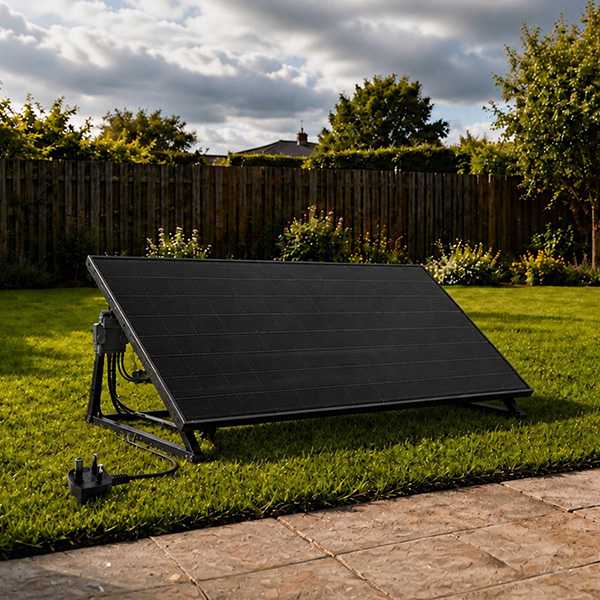
What is plug & play solar?
Plug and play solar is a new and simple small solar energy system designed to connect to a home through a mains socket.





Choosing a plug-in solar system
Plug-in solar systems turn daylight into electricity you can use around the property.
Some complete kits are designed so you can install them yourself. Follow the instructions and installation requirements supplied with the kit. A qualified registered electrician must fit products that require hard-wiring.
Panel capacity and panel count affect two things: how much electricity the system could generate, and how much room it needs. The mounting system tells you where the panels can go. More daylight and less shade can help the panels generate more electricity.
How do plug-in solar panels work?
The panels turn daylight into direct current (DC) electricity. The microinverter changes this into alternating current (AC), ready for electrical appliances to use.
If the system meets the relevant requirements, it connects to a suitable socket. The solar electricity works alongside any extra electricity drawn from the grid.
What is included in a plug-in solar kit?
A complete kit can bring the main parts together:
- one or more solar panels
- a microinverter
- mounting equipment
- connection cables
A microinverter or solar battery is one part of a system, not always a complete plug-in solar kit.
Check what is included. Some items contain a microinverter and cables, but no solar panels.
Panel capacity and AC output: what’s the difference?
Panel capacity is measured in watts. It shows how much electricity the panels could generate. It is not a promise of constant output.
More panels or a higher capacity can mean more generation potential. More panel usually means more space too. Daylight, panel position and shade all play a part.
AC output tells you the maximum amount of electricity the microinverter can supply. A system may combine panels rated above 800W with a microinverter that limits the AC supply to 800W.
In short, panel capacity shows generation potential. AC output shows the maximum supply from the microinverter.
Going for a higher capacity? Make sure there is enough outdoor space for the panels.
Finding the right spot for plug-in solar panels
Choose an outdoor spot with good daylight and as little shade as the space allows. Shade from buildings, trees or fences can reduce electricity generation.
Short on outdoor space? A single-panel kit generally needs less room than a 2-panel system. Measure the available space, then compare it with the panel dimensions and combined weight.
Can plug-in solar panels be mounted on the ground?
A ground-mount frame supports the panels without the need for wall mounting. Some frames need ballast to keep them secure. Check whether it is included or sold separately. Follow the product instructions when you position and secure the frame.
Can plug-in solar panels be fitted to a wall?
A hybrid mounting system gives you 2 options: ground mounting or fitting the panels to a solid wall. Mounting options, fixings and instructions vary, so use the guidance supplied with the product.
Can plug-in solar panels be used on a balcony?
Thinking about balcony installation? Only use a kit that is specifically designed for it. Do not adapt ground or hybrid mounting frames for balcony use.
Getting installation and registration right
Some qualifying plug-in solar kits are designed so you can install them yourself. A qualified registered electrician must fit hard wired products.
Always follow the manufacturer’s instructions when mounting and connecting the system. Keep the supplied product information handy for any required registration. That includes the model details and installation documents.
Can I add a battery to a plug-in solar system?
Solar panels generate electricity from daylight. A solar battery holds onto electricity for later. A battery with an inverter may connect to compatible solar panels. But that does not always make it a self-install product. The battery needs to work with the panels, microinverter and monitoring equipment.
Even compatible products can have different electrical installation requirements. Check the manufacturer’s compatibility and installation guidance.
Monitoring solar generation
Some microinverters can send performance information to a smartphone app through Wi-Fi or Bluetooth. App monitoring may let you see how much electricity the system is generating.
Without Wi-Fi, app monitoring and other connected features may be limited. Check the model’s connection requirements if app monitoring matters to you.
How much electricity can plug-in solar generate?
There is no one-size-fits-all figure. Generation depends on panel capacity, daylight, panel position and shade. Brighter conditions usually mean more electricity. Dull weather, shorter winter days and shade usually mean less. The microinverter’s maximum AC output also caps how much electricity the system can supply at one time.
Are plug-in solar panels worth it?
They may be worth considering if there is enough outdoor space, the installation requirements can be met and the electricity can be used while the panels are generating.
Look at the complete system, not one headline figure. Compare the space, installation requirements and total cost alongside the panel capacity.