

Speakers buying guide: types, tips, and what to consider
From portable Bluetooth and smart speakers to complete home audio systems, find your perfect sound match with our speaker buying guide.
Shop all speakers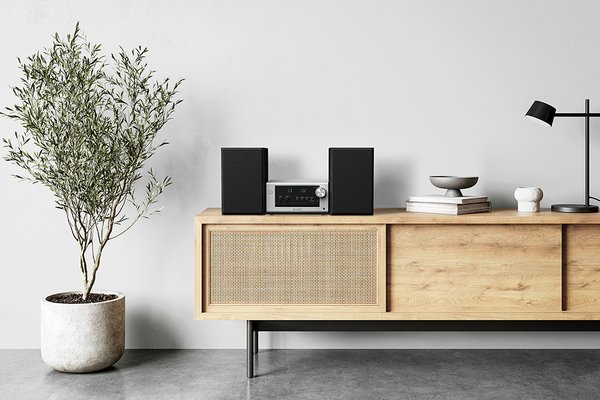&poi={$this.metadata.pointOfInterest.x},{$this.metadata.pointOfInterest.y},{$this.metadata.pointOfInterest.w},{$this.metadata.pointOfInterest.h}&scaleFit={($this.metadata.pointOfInterest.x>0)?$sfpoi:$sfcenter}&sm=aspect&aspect=3:2&sfcenter=center&sfpoi=poi&qlt=50&fmt=auto&noiser=0&fmt.jpeg.interlaced=true&fmt.jp2.qlt=40&)
By Steven Smith | Last edited: June 2026
Finding your perfect speaker doesn’t have to be a guessing game – it’s all about knowing where you will use it, what you want to connect it to, and which features matter most to you. This guide takes you through the main types of speakers, from portable Bluetooth and smart speakers to soundbars and home speaker systems, so you can compare your options with confidence.
Quick answer: what speaker should I buy?
Go for a Bluetooth or portable speaker if you want easy, wireless sound from your phone, tablet or laptop. Choose a smart speaker for hands-free control and built-in smart home features. Pick a soundbar for clearer TV audio or opt for Hi-Fi speakers and full home systems if you’re setting up for music, gaming or a more immersive home cinema experience.
How to choose the right speaker
Start by thinking about where you will use your speaker, what you want to connect it to and whether it needs to be portable. A speaker for podcasts in the kitchen may need different features from one used for films, gaming, parties or a fixed Hi-Fi setup.
Cut through the noise. Here's a quick table to help you choose between different types of speakers based on your needs:
| If you want to… | Consider… | What to check before buying |
|---|---|---|
Listen to music from your phone, tablet or laptop | Bluetooth speaker | Battery life, Bluetooth range, size, charging method and water-resistance rating |
Move music between rooms or take it outside | Portable speaker | Weight, carry design, durability, battery life, waterproof rating and whether it is suitable for indoor and outdoor use |
Use voice control or smart home features | Smart speaker | Voice assistant, app compatibility, Wi-Fi connection, privacy controls and smart home support |
Keep cables to a minimum and play music across multiple rooms | Wi-Fi or multi-room speaker | Wi-Fi support, app setup, multi-room compatibility, streaming service support, voice control and whether it also supports Bluetooth |
Improve TV sound | Soundbar | TV connection, available space, subwoofer type, surround sound support, and whether it works with your TV ports |
Build a more permanent music setup | Hi-Fi speakers | Amplifier compatibility, speaker and room size, speaker cable needs and where the speakers will sit |
Create a fuller home audio setup | Home speaker system | Room size, speaker placement, receiver or amplifier needs and cable requirements |
Before choosing your speaker, ask...
- Where will I use it most? Think about whether it will stay in one room or move around the home.
- What will it connect to? Check compatibility with your phone, tablet, TV, laptop, amplifier, or smart home setup.
- How will it be powered? Some speakers are battery powered, while others need to be plugged into the mains. Make sure you have a suitable spot for plugging in your speakers if needed.
- Does it need to be portable? If you want to carry it around, check the size, durability, waterproof rating, weight, and battery life.
- Will I need any accessories? Some setups may need speaker cables, stands, wall mounts, a receiver or an amplifier.
- Have I checked the product details? Features, connections, and compatibility can vary by model, so always check before buying.
Portable speakers
Carousel
Bluetooth speakers and sound accessories
Slider Grid








Choosing the best smart speaker for your home

A smart speaker connects to the internet and works with a voice assistant or app. It can play music, radio and podcasts, set timers, answer simple questions and control compatible smart home devices.
Before choosing a smart speaker, check:
- Voice assistant and app compatibility: make sure it works with the platform and services you use.
- Smart home compatibility: useful if you want to control compatible lights, plugs or other smart devices.
- Privacy controls: look for microphone controls and review the app settings.
- Shop all smart speakers
Soundbars and TV speakers
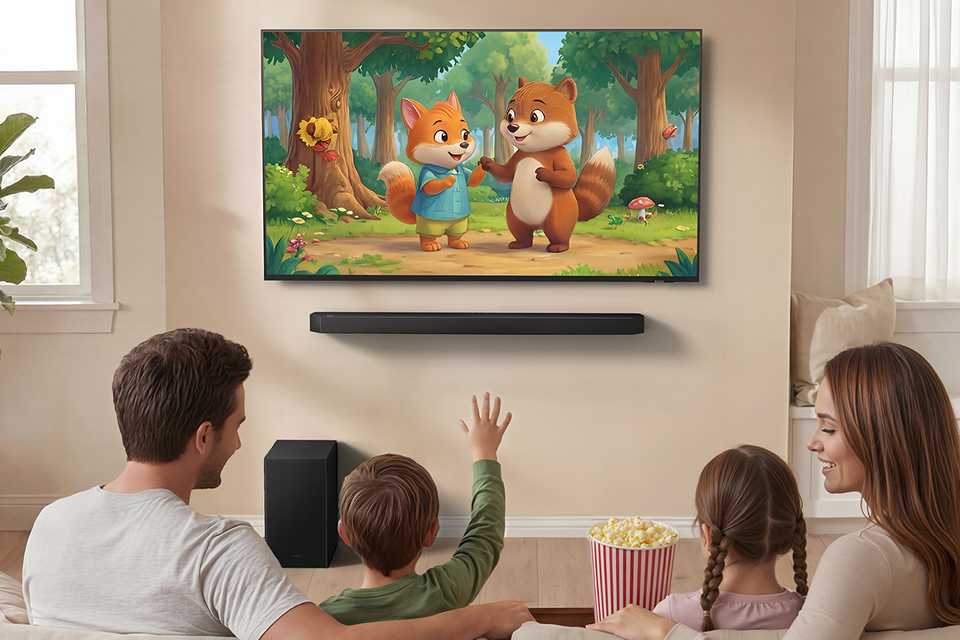
A soundbar is a long, slim speaker designed to sit near your TV. It can be a practical choice if you want clearer TV audio without setting up several separate speakers around the room.
When choosing a soundbar, check:
- TV connection: ensure compatibility with your television, such as HDMI ARC, optical, or Bluetooth for easy setup.
- Available space: measure the area around your TV to confirm the soundbar will fit neatly.
- Subwoofer type: decide between built-in bass or a separate wired or wireless subwoofer for deeper sound and a more immersive listening experience overall.
If you are choosing speakers mainly for TV, you may also find the Argos' TV buying guide helpful for thinking about screen size, room setup and TV accessories.
Home sound system
Hi-Fi speakers and compatibility
A home speaker system is usually designed for a fixed space, such as a living room, music area or home cinema setup. It may include bookshelf speakers, floorstanding speakers, rear speakers, a subwoofer or a soundbar with extra speakers.
Hi-Fi speakers are often used as part of a music setup and may need an amplifier or receiver. If you are adding speakers to existing audio equipment, check compatibility carefully before buying.
Before choosing your home speaker system, check:
- Connection type: Bluetooth, Wi-Fi, HDMI, optical, AUX, USB or speaker cables that connect to your TV.
- Power source: mains powered, battery powered or both for added flexibility.
- Amplifier needs: passive speakers usually need a separate amplifier or receiver.
- Room size and placement: larger rooms may need a wider setup, while some speakers work best on stands, shelves, TV units, or dedicated surfaces.
- Cable requirements: some speakers include cables, while others may need separate accessories.
- Device compatibility: check that your phone, tablet, laptop, TV, amplifier or smart home setup supports the connection you want to use.
Some setups may also need speaker cables, speaker stands or wall mounts. Check the manufacturer’s instructions for the correct cable type and length, and make sure any stand or mount is compatible with the speaker’s size and weight. If you are unsure, check the product manual or manufacturer’s guidance before setting up a speaker system.
Safe listening tips
Turn it up, but keep it kind to your ears. Speakers can be enjoyable at home, outdoors, or at social gatherings, but it is worth keeping volume at a comfortable level. The Health and Safety Executive explains that noise is measured in decibels and that a small increase in decibels can mean a large increase in exposure.
As a simple guide, if you need to raise your voice to speak to someone nearby, the sound may be too loud for long listening. Tinnitus UK advises moving away from speakers where possible, taking breaks in quieter areas and using ear protection at loud events.
For everyday listening:
- Keep the volume at a comfortable level.
- Take breaks during long listening sessions.
- Avoid sitting very close to powerful speakers.
- Position speakers thoughtfully to reduce the need for higher volume.
- Turn the volume down if speech becomes difficult nearby.
- Follow the manufacturer’s setup and use guidance.
Frequently asked questions about speakers
What is a smart speaker?
A smart speaker does more than just play music. Connected to the internet, it’s controlled by your voice or an app, so you can easily play music, radio, podcasts and audiobooks, set timers, ask quick questions or even manage compatible smart home devices. Most smart speakers need a reliable Wi‑Fi connection and an account with their platform to get started. When you’re comparing options, it’s worth checking which voice assistant it uses and whether it works smoothly with the apps and devices you already use.
Which type of speaker is best?
The best speaker for you really comes down to how you plan to use it. If you want quick, wireless listening from your phone or tablet, a Bluetooth speaker is a great place to start. Prefer something you can carry from room to room or take outdoors? A portable speaker keeps things flexible. Smart speakers are ideal if you like the idea of voice control and connected home features, while soundbars are a simple way to upgrade your TV audio. For a more dedicated music setup, Hi‑Fi speakers can offer a richer, more immersive experience.
A good starting point is your main use, then you can narrow things down by looking at size, connection options and the features that matter most to you.
What is the difference between a Bluetooth speaker and a smart speaker?
A Bluetooth speaker pairs directly with a nearby device like your phone, tablet or laptop, making it a simple way to enjoy music, podcasts and audio from your favourite apps. A smart speaker works a little differently, connecting to Wi‑Fi and usually teaming up with a voice assistant or app. That means you can ask it to play music, set reminders, control smart home devices and more.
Some smart speakers can also connect over Bluetooth, but not all models include this, so it’s always a good idea to check what’s supported before you choose.
Do I need a soundbar or speakers for my TV?
A soundbar is often a practical choice if you want clearer TV audio without setting up several separate speakers. It usually sits below or near the TV and connects using HDMI, optical, Bluetooth or another supported connection. Separate speakers or a home speaker system may suit a more permanent setup, depending on your space and equipment. Before buying, check your TV’s available ports and the soundbar’s compatibility guidance.
Can any cable be used as a speaker cable?
No. If your speaker setup needs cables, use the type recommended by the speaker, amplifier or receiver manufacturer. The right cable can depend on the equipment, distance and connection points. Some speakers include the cables needed, while others require you to purchase them separately. If you are replacing or extending speaker cable, check the product manual first and avoid forcing connectors that do not fit. For more complex home audio setups, consider getting advice from a qualified installer.
What is the 83% rule for speakers?
The 83% rule is an informal speaker placement guideline sometimes used in a home audio setup. It suggests having your speakers or seating area at about 83% of the room’s length to help reduce echoes and sound reflections. It is not a buying requirement and will not apply to every room or speaker type. For most customers, it is more useful to focus on safe placement, enough space around the speaker and following the manufacturer’s setup guidance.
Do wireless speakers need to be plugged in?
Some wireless speakers still need to be plugged into the mains for power. “Wireless” often refers to how the speaker receives audio, such as through Bluetooth or Wi-Fi, rather than how it is powered. Portable Bluetooth speakers usually have rechargeable batteries, while many smart speakers and home wireless speakers need a mains connection. Always check whether the speaker is battery powered, mains powered or both.
Are 2.1 speakers good for music?
A 2.1 speaker setup can work well for music, depending on the speaker quality, room size and how you like to listen. The “2” usually refers to left and right audio channels, while the “.1” refers to a subwoofer for lower bass sounds. This can add depth to some music, films and games. If you prefer a simpler setup, a 2.0 speaker system may be enough. For TV use, a 2.1 soundbar can also be a practical option.
What are the best wireless speakers for outdoor use?
Look for portable waterproof Bluetooth speakers built for outdoor use with weather-resistance, dust-resistance, and drop-proof designs. They’re great for days out, camping, and garden use. Also check battery life for longer playtime and stable connection options for smooth, reliable listening.
Discover more inspiration
Carousel

Disclaimer
This guide has been created using Argos speaker categories and product information, alongside UK safe listening guidance from non-commercial sources. Product features, connections and compatibility can vary by model, so always check the individual product details before buying.