

How to choose the best dartboards and darts
By Charlotte Pirie | Last edited: August 2026
Quick answer: what dartboard should I buy?
If you're setting up a dartboard at home, a sisal bristle dartboard is usually the best option. It's durable, self-healing, and designed for steel-tip darts, making it a great choice for most players. If you're just getting started, a dartboard set that includes darts can be a convenient way to begin. More experienced players may want to look for a board with thin, staple-free wiring, as this helps reduce bounce-outs and improves gameplay. Prefer something more casual or want automatic scorekeeping? A soft-tip electronic dartboard could be the better fit.
Why play darts?
Whether you're at the pub or hosting a party at home, playing darts is a great way to have fun. It's simple to set up, needs minimal equipment, and is easy to learn. But there's loads of skill to it too! So if you'd like to be the next Luke "The Nuke" Littler or just want to take up a new hobby, get ready. Perfect your grip, stance and throw, and bag yourself a bullseye.
Everything you need to play darts
Carousel


Understanding a dartboard...
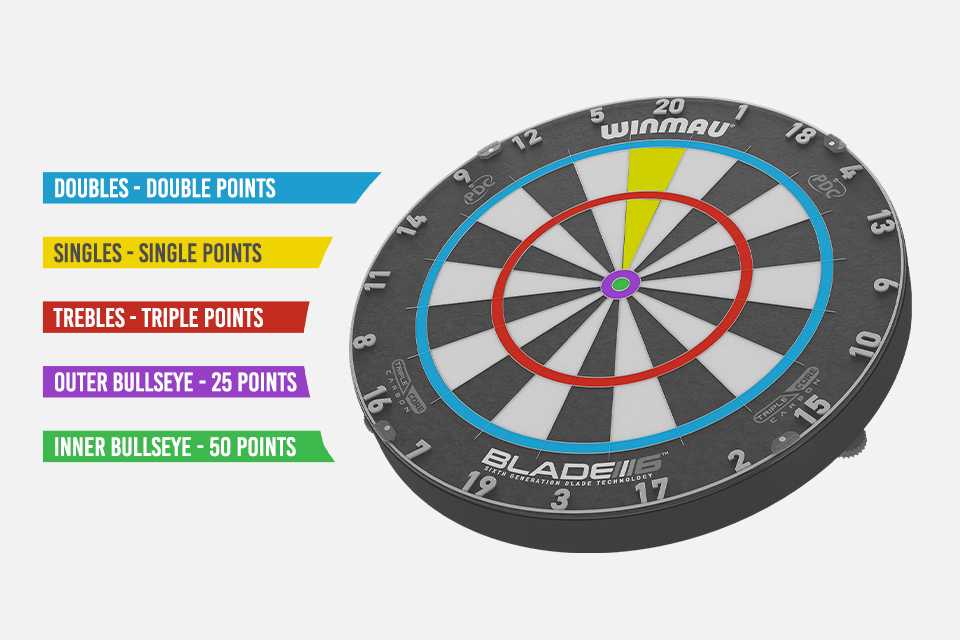
What does it consist of?
- A dartboard has 20 numbered sections or arcs. They are equally spaced by wires running from the centre to the outer rim.
- At the centre sits the inner (double bull - 50 points) and outer bullseye (single bull - 25 points).
- There’s an inner ring halfway across the centre and an outer ring at the edge. They represent the treble and double zones.
- If you hit a dart in the outer double area, the number you hit is doubled. If you hit in the inner treble area, the number is tripled.
- The 2 areas between the rings represent the single scoring zones.
- Shop all dartboards
What should you look for in a dartboard?
Before choosing a dartboard, it’s worth thinking about how often you’ll play, who will be using it, and where you plan to set it up.
•Think about your setup: Before choosing a dartboard, consider how often you'll play, who'll be using it, and where you'll be setting it up.
• Choose the right material: For most home players, a sisal bristle dartboard is a great option because the fibres self-heal after each dart is removed, helping the board last longer.
• Look at the wiring: Thin, staple-free wiring can help reduce bounce-outs and gives you more usable scoring space.
• Match the board to your skill level: Beginners can start with a standard bristle board or a dartboard set that includes darts, while more regular players may benefit from a higher-density board designed for frequent use.
• Pick the right board type: Steel-tip darts should be used with a bristle dartboard, while soft-tip darts require an electronic or soft-tip board.
• Check your available space: Make sure you have enough room to set up the board at the correct throwing distance.
• Protect your surroundings: A dartboard surround, cabinet, or floor mat can help protect nearby walls and floors from stray darts.
Best dartboards for beginners
If you’re new to darts, a sisal bristle dartboard or complete dartboard set is a good place to start. These boards offer a traditional playing experience and are durable enough for regular practice at home.
Why they’re good for beginners:
• Easy to set up at home.
• Durable enough for regular practice.
• Often available as sets with darts included.
• Suitable for learning grip, stance and scoring.
Best dartboards for regular players
If you play often, look for a dartboard with thin wiring, a firm surface and a high-density sisal construction. These features can help reduce bounce-outs, support tighter groupings and give a more consistent playing experience.
Why they’re good for regular players:
• Thin wiring creates more scoring space.
• Higher-density boards can feel firmer and more responsive.
• Reduced bounce-outs help support consistent practice.
• A good option for players aiming to improve their accuracy.
Electronic dartboards for easy and accurate scoring
Bring precision to your game. From automatic scoring to multiple game modes electronic, dartboards are great for beginners and groups that want to play for fun.
Why choose electronic dartboards:
• Automatic scoring: Electronic dartboards calculate scores for you, so there's no need to keep track manually.
• Easy to use: They're a great choice for beginners and casual players who want to focus on the game rather than the maths.
• Multiple game modes: Many electronic dartboards come with a variety of built-in games and scoring options to keep play interesting.
• Designed for soft-tip darts: These boards are made for use with soft-tip darts, making them a safer option for families and shared spaces.
• Perfect for social play: Features like multiplayer modes and digital displays make electronic dartboards ideal for friendly competitions and game nights.
Dartboard setup: height, distance and space
Getting your dartboard setup right is just as important as choosing the right board. Before mounting it to the wall, make sure you have enough space to play safely and take accurate measurements from the correct points. For traditional steel-tip darts, all measurements are taken from the centre of the bullseye and the face of the dartboard.
• Dartboard height: Mount the board so that the centre of the bullseye is 1.73m (5ft 8in) from the floor.
• Throwing distance: The front edge of the throwing line should be 2.37m (7ft 9¼in) from the face of the dartboard.
• Diagonal measurement: If you prefer to check the setup diagonally, the distance from the centre of the bullseye to the front of the oche should measure 2.93m (9ft 7½in).
• Allow enough room behind the oche: It's a good idea to leave at least 0.6-1m of additional space behind the throwing line so players can stand comfortably and move around safely.
• Consider side clearance: Leave enough space on either side of the dartboard to avoid hitting walls, furniture or other obstacles when throwing.
• Protect walls and floors: A dartboard surround, cabinet or floor mat can help protect nearby surfaces from stray darts and dropped equipment.
Tip: Taking the time to measure your setup properly will help create a more enjoyable playing experience and ensure you're practising under the same conditions used in competitive darts.
Understanding darts…
Get to grips with what makes up a dart.
Carousel
?$sfpoi:$sfcenter}&sm=aspect&aspect=2:1&sfcenter=center&sfpoi=poi&qlt=50&fmt=auto&noiser=0&fmt.jpeg.interlaced=true&fmt.jp2.qlt=40&w=600&)
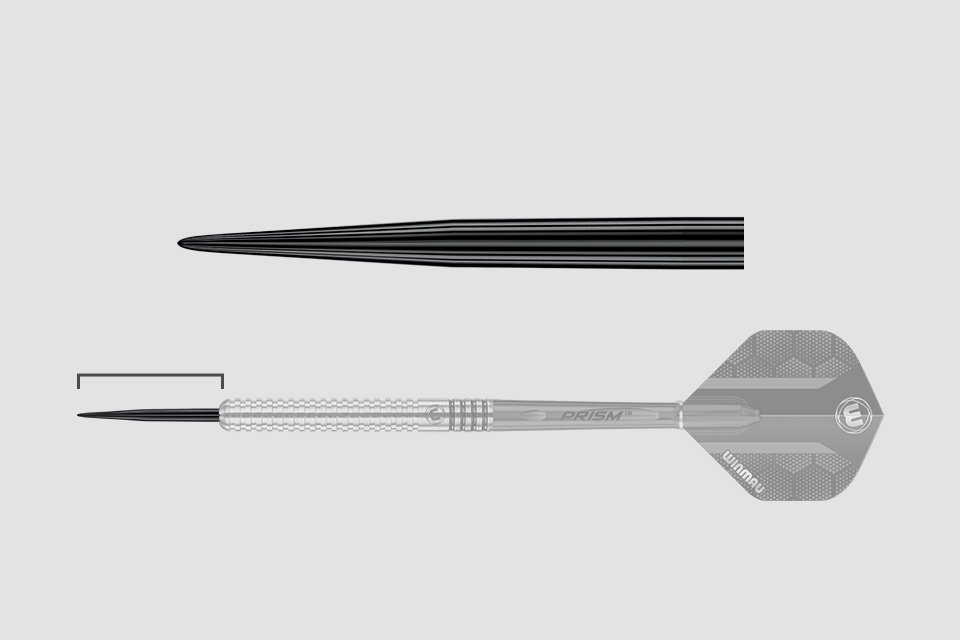
Point
The sharp tip that hits the dartboard.
?$sfpoi:$sfcenter}&sm=aspect&aspect=2:1&sfcenter=center&sfpoi=poi&qlt=50&fmt=auto&noiser=0&fmt.jpeg.interlaced=true&fmt.jp2.qlt=40&w=600&)
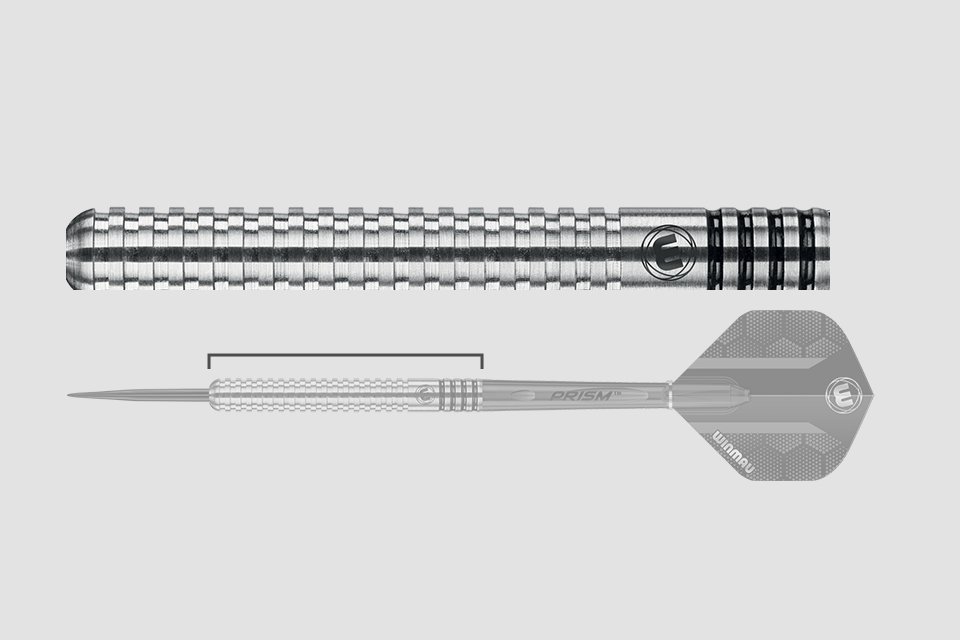
Barrel
The part where you grip the dart.
?$sfpoi:$sfcenter}&sm=aspect&aspect=2:1&sfcenter=center&sfpoi=poi&qlt=50&fmt=auto&noiser=0&fmt.jpeg.interlaced=true&fmt.jp2.qlt=40&w=600&)
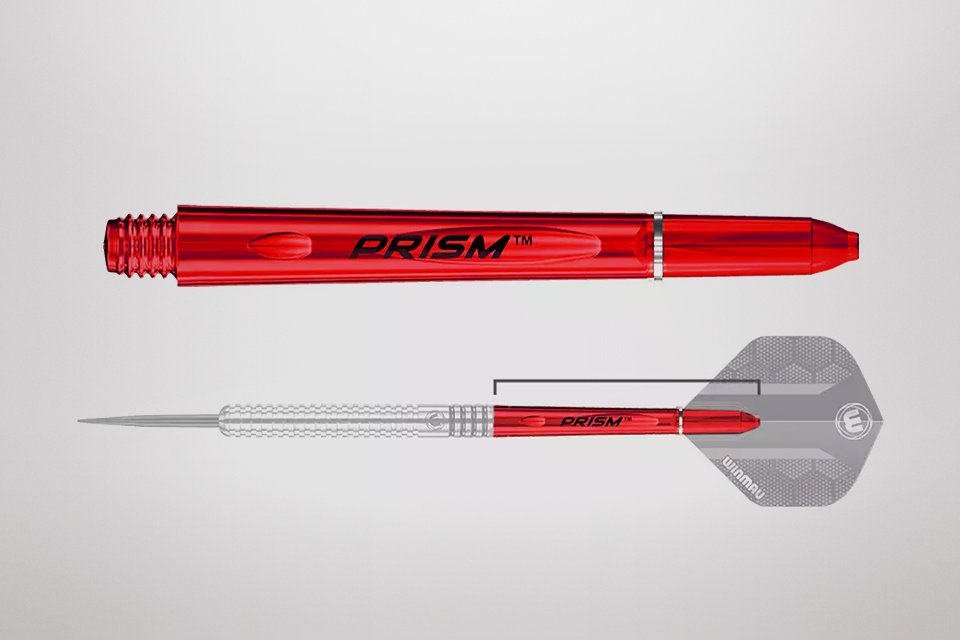
Shaft
Connects the grip with the flight.
?$sfpoi:$sfcenter}&sm=aspect&aspect=2:1&sfcenter=center&sfpoi=poi&qlt=50&fmt=auto&noiser=0&fmt.jpeg.interlaced=true&fmt.jp2.qlt=40&w=600&)
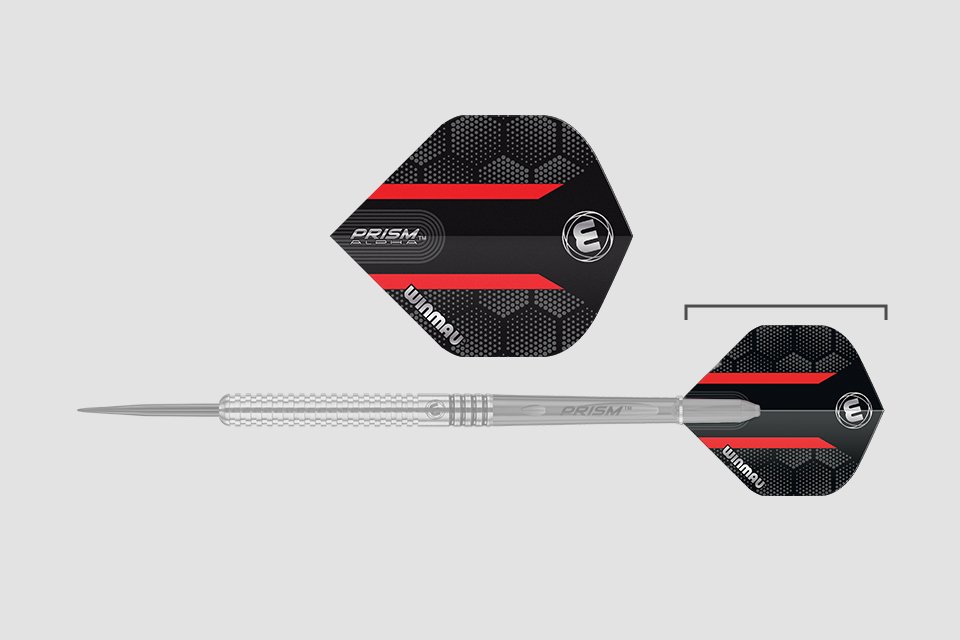
Flight
The back portion of the dart.
?$sfpoi:$sfcenter}&sm=aspect&aspect=2:1&sfcenter=center&sfpoi=poi&qlt=50&fmt=auto&noiser=0&fmt.jpeg.interlaced=true&fmt.jp2.qlt=40&w=600&)
?$sfpoi:$sfcenter}&sm=aspect&aspect=2:1&sfcenter=center&sfpoi=poi&qlt=50&fmt=auto&noiser=0&fmt.jpeg.interlaced=true&fmt.jp2.qlt=40&w=600&)
?$sfpoi:$sfcenter}&sm=aspect&aspect=2:1&sfcenter=center&sfpoi=poi&qlt=50&fmt=auto&noiser=0&fmt.jpeg.interlaced=true&fmt.jp2.qlt=40&w=600&)
?$sfpoi:$sfcenter}&sm=aspect&aspect=2:1&sfcenter=center&sfpoi=poi&qlt=50&fmt=auto&noiser=0&fmt.jpeg.interlaced=true&fmt.jp2.qlt=40&w=600&)
What are the different types of dart grips?
Carousel
?$sfpoi:$sfcenter}&sm=aspect&aspect=2:1&sfcenter=center&sfpoi=poi&qlt=50&fmt=auto&noiser=0&fmt.jpeg.interlaced=true&fmt.jp2.qlt=40&w=600&)
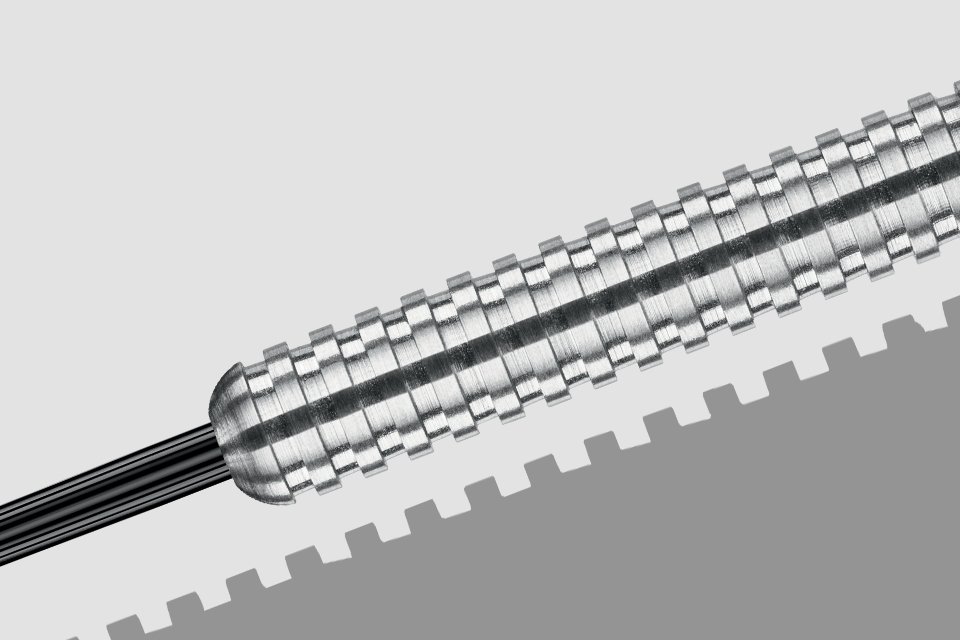
Ring grip
Helps with a consistent finger placement for enhanced control.
?$sfpoi:$sfcenter}&sm=aspect&aspect=2:1&sfcenter=center&sfpoi=poi&qlt=50&fmt=auto&noiser=0&fmt.jpeg.interlaced=true&fmt.jp2.qlt=40&w=600&)
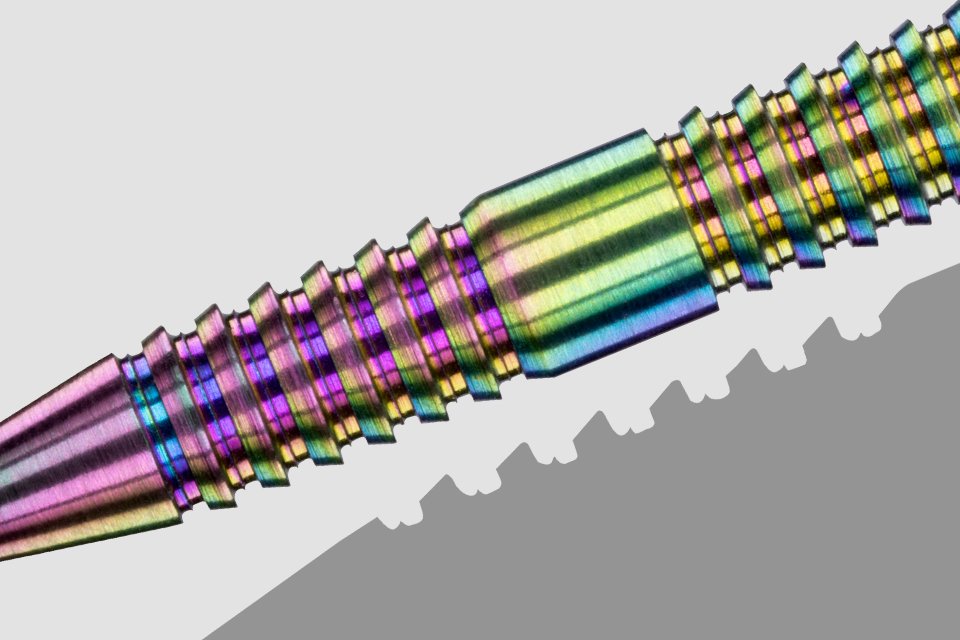
Razor grip
Offers outstanding control, precision, and stability.
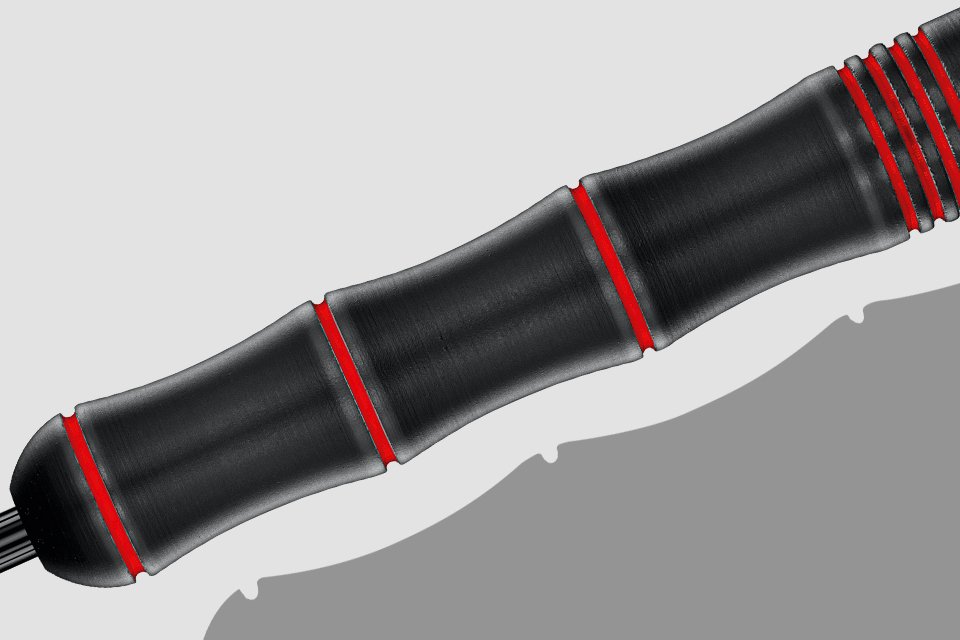?$sfpoi:$sfcenter}&sm=aspect&aspect=2:1&sfcenter=center&sfpoi=poi&qlt=50&fmt=auto&noiser=0&fmt.jpeg.interlaced=true&fmt.jp2.qlt=40&w=600&)
Scallop grip
Grooved area on the dart for a consistent grip each time.
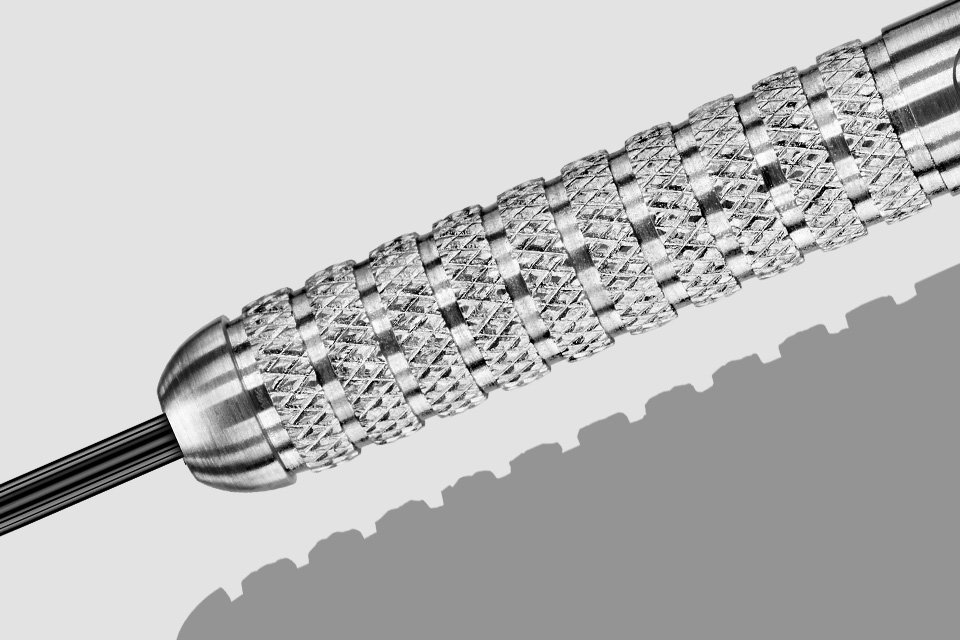?$sfpoi:$sfcenter}&sm=aspect&aspect=2:1&sfcenter=center&sfpoi=poi&qlt=50&fmt=auto&noiser=0&fmt.jpeg.interlaced=true&fmt.jp2.qlt=40&w=600&)
Knurled grip
Features horizontal or crossing lines for that extra grip.
?$sfpoi:$sfcenter}&sm=aspect&aspect=2:1&sfcenter=center&sfpoi=poi&qlt=50&fmt=auto&noiser=0&fmt.jpeg.interlaced=true&fmt.jp2.qlt=40&w=600&)
?$sfpoi:$sfcenter}&sm=aspect&aspect=2:1&sfcenter=center&sfpoi=poi&qlt=50&fmt=auto&noiser=0&fmt.jpeg.interlaced=true&fmt.jp2.qlt=40&w=600&)
?$sfpoi:$sfcenter}&sm=aspect&aspect=2:1&sfcenter=center&sfpoi=poi&qlt=50&fmt=auto&noiser=0&fmt.jpeg.interlaced=true&fmt.jp2.qlt=40&w=600&)
?$sfpoi:$sfcenter}&sm=aspect&aspect=2:1&sfcenter=center&sfpoi=poi&qlt=50&fmt=auto&noiser=0&fmt.jpeg.interlaced=true&fmt.jp2.qlt=40&w=600&)
Difference between soft tip and steel tip darts
The main difference lies in the tip material and the usage of these darts. Take a look at their key features to choose the right dart for your game.
| Feature | Soft‑tip darts | Steel‑tip darts |
|---|---|---|
Type of dartboard used | Designed for electronic dartboards, which register scores automatically. | Used with traditional bristle/sisal dartboards, the standard style for pubs and competitive play. |
Tip material and weight | Made from plastic to safely interact with electronic board holes. It's often lighter, which suits fast throwers or beginners. | Made from metal, allowing the dart to penetrate and grip sisal fibres. It's typically heavier, offering stability and precision for more controlled throws. |
Safety and durability | Generally safer and suitable for casual play or younger players. But they're less durable and can bend or break more easily and may need replacing more often. | Sharper and heavier, requiring more caution during use. They're more durable and long‑lasting due to metal construction. |
Best for | Home use, family games, and electronic scoring setups. | Players wanting a traditional experience, improved accuracy, and long‑term durability. |
Which materials are darts made of?
Choose a dart material that suits your style.
Tungsten darts: Best for advanced players, these offer a slim profile allowing a tighter grouping and improved precision.
Shop tungsten darts
Brass darts: Best for beginners, these are a durable and comparatively pocket-friendly option with a wider barrel.
Shop brass darts
Steel darts: Best for players looking for budget-friendly and durable options, these darts are lightweight and corrosion resistant.
Shop steel darts
Shop darts by weight
How to set up darts safely at home
Before you start playing, choose a clear area where players have plenty of room to throw and where no one is likely to walk between the oche (throw line) and the board.
• Pick the right spot: Try to avoid setting up your dartboard near doors, windows, TVs or other fragile items that could be damaged by a stray dart.
• Make sure it's securely mounted: Before each game, check that the dartboard is firmly attached to the wall and isn't wobbling or shifting.
• Protect your walls and floors: A dartboard surround, cabinet or floor mat can help catch the occasional missed shot and keep your space looking its best.
• Store darts safely: When the game is over, keep steel-tip darts stored somewhere secure and out of reach of young children.
• Keep the throwing area clear: Check that there's enough space behind the oche for players to stand comfortably and that spectators can stay safely out of the way.
• Wait until everyone has thrown: Only walk up to the board to retrieve darts once all players have finished their turn.
Top tip: Creating a dedicated darts area can make games safer, more enjoyable and help your setup feel just like your favourite pub or games room.
Darts accessories you need to play
A few simple accessories can make your darts setup easier to use and help protect your home.
• Dartboard surround: Helps protect the wall around the board. Shop dartboard surrounds
• Dartboard cabinet: Covers the board when not in use and can add storage. Shop dartboard cabinets
• Dart mat: Protects floors and helps mark the throw line. Shop dart mats
• Spare flights and shafts: Useful if parts get damaged during play. Shop flights and shafts
• Dart case: Keeps darts together and protects the tips, flights and shafts. Shop dart cases
• Dartboard stand: A good option if you don’t want to fix a board to the wall. Shop dartboard stands
Darts top picks
Slider Grid
- Save 25%£28.50Was
£38.00Free collection or delivery from £4.95 - £88.00Free collection or delivery from £4.95
- Save 20%£56.00Was
£70.00Free collection or delivery from £4.95 - Save 25%£33.75Was
£45.00Free collection or delivery from £4.95 - Save 20%£24.00Was
£30.00Free collection or delivery from £4.95


FAQs about darts
What are the different types of dartboards?
There are three main types of dartboards - bristle, magnetic and electronic. Bristle, also known as sisal dartboards are traditional options. Magnetic dartboards are used for darts with flat tips to ensure safety - great for children and casual play. Electronic dartboards are digital and have an automatic scoring feature.
How can I choose the right darts for my playing style?
Choose the right dart for you by following these tips:
- Consider your playing style and match the weight of your dart with your throw.
- Remember - heavy darts or slow throws and lightweight darts for fast throws.
- Pick a barrel shape that gives you the best grip - begin with knurled.
- Keep trying until you find the best dart (barrel, flight and shaft combination) for you.
- Most beginners start with a 22 - 24g of dart.
How high should I hang the dartboard from the floor?
Hang your dartboard so that the bullseye is 1.73m (5ft 8 inches) above the ground and you should stand 2.37m (7 ft 9.25 inches) away from the dartboard.
How to throw darts?
While throwing a dart looks like a piece of cake, there are multiple factors that you need to perfect.
- Find your stance and be stable
- Hold the dart and make sure your grip is comfortable.
- Position the dart to aim at the dartboard.
- Release the dart - take your arm forward, the backwards to throw the dart in a forward motion.
How far away should you stand from a dartboard?
For steel-tip darts, the oche (throw line) should be positioned 7ft 9¼in (2.37m) from the face of the dartboard. This official distance helps ensure fair and consistent gameplay, whether you're practising at home or playing competitively.
Are steel-tip or soft-tip darts better?
It depends on your setup and preferences. Steel-tip darts are ideal for traditional bristle dartboards and competitive play, while soft-tip darts are designed for electronic dartboards, offering automatic scoring and added safety for casual players.
What dartboard accessories do I need?
Popular dartboard accessories include spare flights and shafts, a dart case for storage, a dartboard surround for wall protection, a cabinet for a tidy setup, and a dart mat or oche marker to help maintain the correct throwing distance.
Can you use steel-tip darts on an electronic dartboard?
No, steel-tip darts should not be used on electronic dartboards. Electronic boards are specifically designed for soft-tip darts, and steel tips can damage the board's plastic segments and electronic components, potentially causing costly repairs.
How do I get better at darts?
The best way to hone your game is to keep practising. Focus on the target and play dedicatedly. Stay consistent and play regularly. Set goals for yourself and keep reviewing your performance. Here are some more ways to get better at darts.
What to get someone who loves darts?
For darts lovers, a variety of dartboards, darts, shafts, flights, stands, surrounds and cases are a great options. If you are unsure, then go for a darts playing experience or an Argos gift card so they can buy their preferrable dart equipment.
Which country is considered the birthplace of modern darts?
While it began as a military pastime, England is considered as the birthplace of modern darts.