
Flying with a baby: a practical guide for your first flight
Ready for take-off? Flying with a baby can be a fun experience with a bit of planning and the right essentials. This guide covers everything from baby packing essentials to handy airport tips and keeping your little one comfy on the plane.
&poi={$this.metadata.pointOfInterest.x},{$this.metadata.pointOfInterest.y},{$this.metadata.pointOfInterest.w},{$this.metadata.pointOfInterest.h}&scaleFit={($this.metadata.pointOfInterest.x>0)?$sfpoi:$sfcenter}&sm=aspect&aspect=3:2&sfcenter=center&sfpoi=poi&qlt=50&fmt=auto&noiser=0&fmt.jpeg.interlaced=true&fmt.jp2.qlt=40&)
By Zara Flynn | Last edited: July 2026
Flying with a baby can feel like a lot to plan, especially on your first trip, but a little preparation goes a long way. In this comprehensive guide, you'll learn what to check before you travel, what to pack in your hand luggage, and how baby milk, food rules, and travel essentials can make airport time easier. Before you book, always check your airline’s latest rules on infant tickets, baggage, car seats, prams and travel strollers, as these can vary.
Quick checklist before flying with a baby
Before you head to the airport, a quick run-through of the essentials can make the whole journey feel much smoother. Use this checklist before you travel to help avoid last-minute surprises.
- Baby travel documents: Babies need their own passport for international travel, so make sure everything is valid and check entry rules for your destination.
- Airline infant policy: Every airline is a bit different when it comes to seating, baggage, prams and car seats, so it’s worth checking in advance.
- Hand luggage allowance: Baby essentials like nappies, feeds and spare clothes can add up quickly, so plan your space carefully.
- Baby milk and food rules: You can usually take enough baby milk, food, and sterilised water for your journey through UK airport security.
- Pushchair or stroller rules: Find out if your pushchair can go to the gate, needs to be checked in, or is allowed in the cabin.
- Sleep setup at destination: Check if a travel cot is provided so you don’t pack more than you need.
- Transfers after landing: Think ahead about how you’ll collect bags and get to your accommodation with a baby in tow.
When can I fly with my baby?
There is no single UK rule for when a baby can fly. Airlines set their own policies, so always check directly before booking. Some airlines may have extra requirements for newborns, including a doctor’s letter in certain cases.
For international trips, allow enough time to apply for your baby’s passport. A child who has never had a British passport will need a first child passport application.
What documents does my baby need to fly?
For international travel, your baby will usually need their own passport. Some destinations may also have extra entry requirements, so always check the rules for the country you are travelling to before you book. It can also be useful to keep copies of important information together in your hand luggage, such as:
- Baby’s passport
- Booking confirmation
- Travel insurance details
- Any medical or prescription information
- Birth certificate, if your airline or destination requires additional proof
- Consent letter, if one parent or guardian is travelling alone and this is required for your journey
Keep all documents in an easy-to-reach organiser or pouch so you are not searching through bags at check-in or boarding.
What can I take through airport security for my baby?
When you’re travelling with a baby, airport security rules are a bit more relaxed, so you can bring the essentials you’ll need along the way. From formula milk or expressed breast milk to essential medicines, you can take everything your baby would need during the flight. These items aren’t restricted to the usual 100ml liquid limit, but they should be for your baby’s use during the journey. You may be asked to show or test them at security, so it’s best to keep everything easy to reach in your hand luggage.
It’s also worth knowing that breast milk can be carried in hand luggage even if you’re not travelling with your baby, as long as each container is no more than 2,000ml.
Can I take baby food and milk in hand luggage?
You can take baby food and milk in hand luggage. Below is the general guidance from the UK government to help you pack.
| Item | Hand luggage guidance |
|---|---|
Formula milk | Allowed when travelling with a baby. Check airport and airline guidance before travel. |
Breast milk | Allowed in containers up to 2,000ml. |
Sterilised water | Allowed when travelling with a baby. |
Baby food | Allowed when travelling with a baby. |
Cooling gel packs and ice packs | Allowed in hand luggage and hold luggage. |
What to pack in hand luggage when flying with a baby?
Pack your baby bag around the parts of the journey you cannot easily control: delays, spills, nappy changes, temperature changes and feeding times. A practical hand luggage list includes:
- Nappies and wipes
- Nappy bags
- Changing mat
- Spare baby clothes
- Spare top for you
- Muslins or bibs
- Baby food, milk or snacks
- Bottles, cups or feeding equipment
- Dummies
- Comfort toy or blanket
- Lightweight blanket or layers
- Baby-safe headphones or ear defenders
- Travel documents
- Any essential medicines or prescription items
- Small toys or books
- Hand sanitiser and tissues
Aim to keep the most-used items near the top of your bag. Dedicated organisers or pouches help too: one pouch for feeding, one for changing and one for spare clothes, so you don't have to shuffle things in the entire bag.
Can I take a pram, pushchair or stroller on a plane?
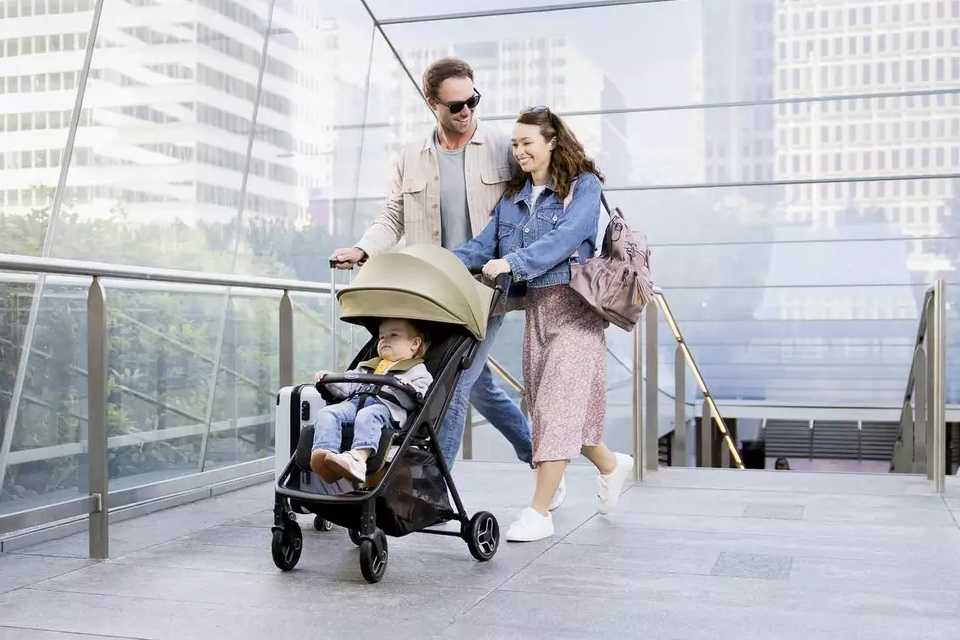
Yes, most airlines allow you to travel with a pram, pushchair or stroller, but the exact rules can vary. In many cases, you can use your pushchair throughout the airport and hand it over at the boarding gate, where it will be placed in the aircraft hold and returned to you after landing.
Some airlines also allow compact travel strollers in the cabin if they fit within the airline's hand luggage size limits, although availability and requirements differ by carrier. Because policies vary, it's always worth checking your airline's website before you travel.
- Gate check: Use your pushchair up to the aircraft door before handing it to staff.
- Checked baggage: Larger prams and travel systems are often checked into the hold.
- Cabin-approved strollers: Some lightweight, foldable travel strollers may be allowed in the overhead locker if they meet cabin baggage requirements.
- Free baby equipment allowance: Many airlines let you carry at least one pushchair or stroller free of charge when travelling with a child.
Top tip: A lightweight travel stroller can make airport transfers much easier, especially if you need to navigate security, boarding and baggage reclaim with a baby.
Choosing a travel pushchair for flying
A good travel pushchair should be lightweight, easy to fold and practical for moving through airports. Use this checklist to compare your options before you travel.
| Feature | Why it's useful for flying |
|---|---|
Lightweight design | Easier to carry through the airport and lift when needed. |
Compact fold | Takes up less space and may meet cabin baggage requirements on some airlines. |
One-hand fold | Makes it quicker to collapse while juggling a baby and hand luggage. |
Cabin-friendly size | Some ultra-compact models can be stored in overhead lockers, depending on airline rules. |
Carry strap or travel bag | Helps when moving through terminals or boarding the aircraft. |
Reclining seat | Gives your little one a comfortable place to rest during long travel days. |
Storage basket | Handy for keeping nappies, snacks, and travel essentials within easy reach. |
Durable wheels | Makes navigating airports, pavements and holiday destinations much smoother. |
Slider Grid
- £45.00Free collection or delivery from £4.95









How to protect a pram when flying?
If your pushchair or pram is going into the hold, a pushchair travel bag can help keep it together and reduce marks from handling. Remove loose accessories before check-in, including toys, cup holders, buggy boards or rain covers, unless they are packed securely.
Before you travel:
- Fold the pushchair at home so you know how it works
- Take a quick photo before check-in, especially if it has detachable parts
- Label the pushchair and travel bag with your contact details
- Pack the rain cover separately if you may need it when you land
- Check where you will collect it after the flight, as this can vary by airport
If you need a stroller as soon as you leave the plane, ask your airline where it will be returned. Some are collected at the aircraft door, while others may come out with oversized baggage.
Feeding your baby during take-off and landing
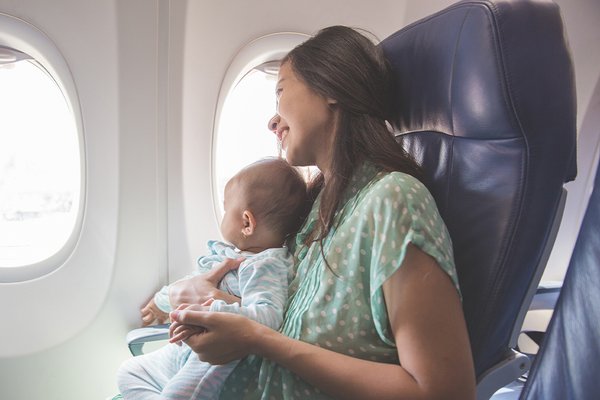
Take-off and landing are often the trickiest parts of a flight for little ones, as changes in cabin pressure can sometimes cause discomfort in their ears. Feeding your baby during these stages can encourage swallowing, which may help relieve the pressure.
Whether you breastfeed, bottle-feed or offer a dummy, it can be helpful to have it ready as the plane begins to climb or descend. If your baby is asleep, there's no need to wake them as many babies sleep comfortably through take-off and landing.
Quick tips
- Have a feed or dummy within easy reach.
- Offer breast or bottle feeds during take-off and descent.
- Follow your baby's usual feeding cues where possible.
- Keep a muslin cloth handy for spills and winding.
- Stay flexible, every baby responds differently.
A little preparation can go a long way, helping both you and your baby feel more relaxed as you travel.
How do I help my baby sleep on a plane?
A plane is a new environment, so sleep may not follow the usual routine. The aim is not to create a perfect nap setup, but to make rest feel familiar and comfortable where you can.
- Dress your baby in soft layers so they can adjust to cabin temperature
- Keep their usual comforter, blanket or dummy close by
- Choose easy-change clothes for nappy changes in small spaces
- Use a baby carrier in the airport, if suitable, so your hands are free before boarding
- Try to follow parts of your usual sleep routine, such as a feed, story or comfort item
- Keep expectations flexible, especially on short flights
If you are booking a long-haul flight, check whether your airline offers bassinets and how to request one. Availability, weight limits and seat positions vary by airline.
Shop all baby travel essentials
Carousel
Airport and flight tips for a calmer journey
A bit of planning can make the day easier, especially if you are travelling during school holidays or peak airport times.
Before you leave home
- Check airline baggage, pushchair and car seat rules
- Check airport security guidance for baby milk and food
- Pack baby liquids where they are easy to remove
- Charge your phone and keep documents accessible
- Leave extra time for feeding, changes, and security
At the airport
- Use a baby carrier if you need both hands free
- Keep the pushchair available until the gate if your airline allows it
- Change your baby's nappy shortly before boarding if you can
- Keep one small pouch handy with nappies, wipes and a spare outfit
On the plane
- Keep feeds or dummies close for take-off and landing
- Use layers to help with changing cabin temperature
- Offer quiet toys or books for older babies
- Ask cabin crew where the changing facilities are
Complete your travel planning
If your journey includes more than just a flight, these guides can help with the rest of your trip.
- Staycations with a baby: useful if you are planning a break within the UK with your baby and you need packing or accommodation tips.
- Car journeys with babies: useful if you are driving to the airport or hiring a car after landing.
FAQs about flying with a baby
How long should you wait to fly with a baby?
There is no single rule in the UK for how long you should wait before flying with a baby. Airlines set their own minimum age rules, so check them before you book. Some may ask for medical confirmation if your baby is very young. It's always advisable to speak to your GP, midwife or health expert before travelling.
What documents does a baby need to fly?
For international travel, your baby will usually need their own passport. Children who have never had a British passport need a first child passport application. You may also need travel insurance details, booking confirmation, medical information or extra documents depending on your destination and airline. If one parent or guardian is travelling alone, check whether the airline needs a consent letter or supporting documents before you go.
How do I protect my baby’s ears on a plane?
Pressure changes during take-off and landing can make babies uncomfortable. Feeding, offering a dummy or giving a drink can encourage swallowing, which may help their ears adjust. Keep feeds or comfort items close so you can offer them during ascent and descent.
How can I get my baby to sleep on a plane?
Try to make the flight feel as familiar as possible. Dress your baby in comfortable layers, keep their usual comfort item nearby and follow small parts of your normal sleep routine, such as a feed, cuddle or a story. A baby carrier can also be helpful while moving through the airport before boarding. Sleep may be shorter or more broken than usual, so plan for flexibility rather than a perfect routine.
Is my stroller counted as carry-on baggage?
This depends on your airline and the size of your stroller. Some compact travel strollers may be allowed in the cabin if they meet the airline’s size and weight limits, while others need to be checked in or handed over at the gate. Always check your airline’s latest pushchair and cabin baggage rules before travelling. If you are buying a travel stroller, check the folded dimensions, weight, and age suitability before you choose.
How do I protect a pram or a pushchair when flying?
A pushchair travel bag can help keep your pram or stroller together while it is in transit. Remove loose accessories, fold the pushchair securely and label the bag with your contact details. It can also help to take a quick photo before check-in, especially if the pushchair has detachable parts. Ask your airline where you will collect it after landing, as this can vary by airport and route.
Can I take baby milk and food through airport security?
Yes. When travelling with a baby, you can take enough baby food, baby milk and sterilised water for the journey. There is no legal limit, but you should check with your airline before you travel. Breast milk can be carried in hand luggage in containers up to 2,000ml.
Which baby travel essentials are useful for flying?
Useful baby travel essentials for flying include nappies, wipes, spare clothes, muslins, feeds, dummies, comfort items and a changing mat. Depending on your journey, you may also want a lightweight travel pushchair, pushchair travel bag, baby carrier or travel cot. Focus on items that help with feeding, changing, sleep and moving through the airport, rather than packing everything you use at home.