
Plug and play solar explained
Enjoy simple, do-it-yourself solar power by plugging in solar power systems to your home and enjoy extra power.
&poi={$this.metadata.pointOfInterest.x},{$this.metadata.pointOfInterest.y},{$this.metadata.pointOfInterest.w},{$this.metadata.pointOfInterest.h}&scaleFit={($this.metadata.pointOfInterest.x>0)?$sfpoi:$sfcenter}&sm=aspect&aspect=2:1&sfcenter=center&sfpoi=poi&qlt=50&fmt=auto&noiser=0&fmt.jpeg.interlaced=true&fmt.jp2.qlt=40&)
By Kirsty Hudson | Date published: August 2026
Plug and play solar is a new way to generate renewable electricity at home without a full rooftop solar installation. Also known as plug-in solar, these compact systems are designed to make solar energy more accessible. In this guide, we'll explain how plug and play solar works, how it compares with other solar options and what UK homeowners and renters should know about current rules and safety considerations.
Plug and play solar explained
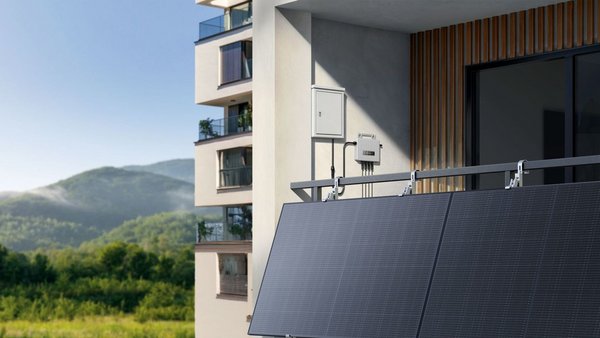
Plug and play solar is a new and simple small solar energy system designed to connect to a home through a mains socket. It is sometimes called plug-in solar or balcony solar.
One or more small panels generate power as with a normal solar system. The panels pass this through a microinverter, converting the power before it is used in your home’s circuit. Unlike a portable solar panel, plug-in solar is intended to feed electricity into household wiring rather than charge a separate device or battery.
Plug-in solar is a way to make solar power more accessible to people with insufficient roof space for traditional systems.
How does plug and play solar work?
A plug-in solar system is designed to work in four main stages:
- The panels collect solar energy. Solar cells turn light into direct current electricity.
- A microinverter converts the electricity. This changes direct current into the alternating current used in a home.
- The system plugs into your wall socket, allowing the generated electricity to enter the home’s electrical system.
- The home uses electricity as it is generated. If household demand is higher than the solar output, the remaining electricity continues to come from the grid.
Generation varies with daylight, panel position, shade, weather and the specifications of the system. A small plug-in system isn’t designed to run an entire home or provide guaranteed backup during a power cut.
What is a microinverter?
A microinverter converts the direct current electricity generated by a solar panel into the alternating current electricity used in a home. It also forms part of the system’s safety controls.
Can you plug a solar system into a socket in the UK?
As of the 27th August 2026, plug-in solar is legal in the UK. Systems where pannels connect to a microinverter which in turn is plugged into a socket are allowed upto a maximum of 800W and should be registered. The UK Government and Energy Savings Trust websites both have more information to help you stay compliant with this new legislation.
Plug and play solar safety checks
Plug-in solar introduces electricity into your household circuit.
Before purchasing and installing a plug-in solar system check the following to remain compliant with this new legislation:
- Current UK rules: Confirm that the necessary regulatory changes have taken effect.
- Product compliance: Check that the complete system is approved for the UK market and meets the requirements in force at the time. Check the UK Government guidance for all necessary approvals and ratings.
- Your home’s wiring: Ask a registered electrician whether your electrical installation and protective devices are suitable.
- Manufacturer instructions: Follow the instructions for the complete kit, including the panel, microinverter, cable, plug and mounting equipment.
- One complete system: Do not combine parts from different kits unless the manufacturer explicitly confirms compatibility.
- Outdoor suitability: Check weather resistance, cable routing and where each component can safely be used.
- Secure mounting: Panels must be fixed as instructed so they cannot fall, move or create a hazard.
- Permission: If you rent or live in a flat, check your tenancy agreement and obtain any permissions required from your landlord, freeholder or building manager.
- Network requirements: Follow any notification or registration process required by the manufacturer, electricity network operator or future regulation.
Do not connect a plug-in solar system through an extension lead, adaptor or multi-socket block. Do not alter a plug, cable or electrical protective device yourself.
If you have any doubt about your wiring or the proposed position of a system, speak to a registered electrician before making a purchase.
Is plug and play solar right for your home?
Plug and play solar may offer another option for people who want to generate a small amount of electricity but cannot have a conventional rooftop system. Suitability will depend on more than having a sunny space.
Your outdoor space
The panel needs a suitable position with useful daylight and limited shade. A balcony, terrace or garden may appear suitable, but you also need to consider:
- Whether the panel can be mounted securely
- Whether it will block an exit or access route
- Whether cables can be routed safely
- Whether the location is exposed to strong wind
- Whether the panel could fall onto a shared or public area
- Whether the manufacturer allows the proposed mounting position
Do not balance a panel on a balcony, windowsill, roof edge or piece of furniture. Always follow the guidelines and installation instructions provided by the manufacturer of your system to ensure suitability and safety for your home.
Your electrical installation
A plug-in solar system sends electricity into your home’s wiring. Older, modified or poorly maintained installations may not have suitable protective devices.
The visible condition of a socket cannot confirm that the wiring behind it is suitable. A registered electrician can assess the installation and advise on any checks required under the rules and product instructions that apply at the time.
When you use electricity
Solar panels generate electricity during daylight hours. A household that uses more electricity during the day may be able to use more of the electricity as it is produced.
Saving estimates are only for guidance as power generation, household usage and actual savings will vary by location, size of house and individual usage.
Permissions and shared buildings
Renters and people living in flats may need permission before attaching equipment to a balcony, wall, railing or other part of the building.
There may also be restrictions covering the building exterior, shared areas, fire routes and structural safety. Ask the relevant landlord, freeholder or building manager before fixing anything in place.
What is included in a plug and play solar kit?
The exact contents will vary, but a complete system may include:
- One or more solar panels
- A microinverter
- Purpose-designed cables and connectors
- A mains connection
- Mounting equipment
- A monitoring unit or app
- Instructions and safety information
Check what is included rather than choosing individual parts based only on their connector shape. A connector that physically fits does not confirm electrical compatibility.
Plug-in solar, portable solar or rooftop solar?
These options all use solar panels, but they are designed for different purposes.
| Type of solar product | Main purpose | Connection | Typical use |
|---|---|---|---|
Plug and play solar | Contribute electricity to household circuit | Purpose-designed mains connection | Small-scale home generation |
Portable solar panel | Charge a compatible device or power station | USB or dedicated low-voltage connector | Camping, travel or portable device charging |
Rooftop solar system | Generate electricity for a property | Fixed electrical installation by qualified professionals | Larger-scale home generation |
Solar garden product | Power an individual outdoor item | Built-in panel and battery | Garden lights or small outdoor devices |
Do not connect a portable solar panel to a household socket. Portable panels should only be connected to devices the manufacturer lists as compatible.
You can explore our portable solar panels and portable power stations if you want a system designed to charge compatible equipment rather than feed electricity into household wiring.
Things to consider before buying a plug-in system
Before investing in a plug-in system, preparation and planning will make the installation process go smoothly.
- Consider where a panel could be positioned and whether it can be secured safely.
- Check your tenancy or building rules.
- Look at when your household uses electricity.
- Arrange an electrical inspection if you have concerns about the condition of your wiring.
- Check official UK guidance for regulatory updates.
- Keep plug-in solar separate from portable solar charging and professionally installed rooftop systems.
Look for clear information about:
- Compliance with the UK requirements in force
- The complete system and all included components
- Maximum electrical output
- Compatible mounting options
- Weather and temperature limits
- Required wiring or socket checks
- Protective and automatic shutdown features
- Power network notification or registration
- Product guarantees and customer support
- Monitoring features
- What happens to electricity that is not used immediately
Avoid products that make guaranteed bill-saving, whole-home power or fixed payback claims. Performance depends on the product, location, daylight, shade and how much electricity your household uses while the system is generating.
For practical ways to reduce everyday energy use now, read our energy saving ideas. You can also explore our sustainable home ideas for broader guidance around reducing waste and energy use.
FAQs about plug and play solar
What is plug and play solar?
Plug and play solar is a small solar energy system designed to connect to household wiring through a purpose-designed mains connection. Solar panels generate direct current electricity, and a microinverter converts it into the alternating current used in a home. Unlike a portable solar panel, the system is intended to contribute electricity to the household circuit rather than only charge a separate device or battery. UK rules and product requirements are still developing, so check current official guidance before buying or connecting a system.
Do plug-in solar panels work in the UK?
Solar panels can generate electricity from daylight rather than heat, so sunshine is not the only factor. However, output changes with the strength of daylight, season, shade, panel position and product specification. A small plug-in system would be intended to contribute some electricity while it is generating, not power a whole home. Whether it suits you will also depend on your daytime electricity use, available outdoor space, wiring and permissions. Any generation or saving estimate should be treated as guidance rather than a guarantee.
What is the difference between plug-in solar and portable solar panels?
A plug-in solar system is intended to feed electricity into household wiring through a mains connection. A portable solar panel usually supplies electricity to a compatible power station, battery or device through USB or another dedicated connector. It does not normally feed electricity into the home’s electrical circuits. Check the manufacturer’s compatibility instructions before connecting any solar panel. If you need power for camping, travel or compatible devices, browse our portable solar panels and portable power stations.
Can renters use plug and play solar?
Plug and play solar may eventually provide an option for some renters, but permission and safety checks may still be required. A panel attached to a balcony, wall or railing could affect the building exterior or a shared area. Check your tenancy agreement and ask your landlord, freeholder or building manager before installing anything. You will also need to follow the product instructions and any UK electrical, mounting and network requirements in force at the time. A registered electrician can advise whether the home’s wiring and protective devices are suitable.
Can plug and play solar power a whole house?
A small plug-in solar system should not be treated as a whole-house power system. Its output will depend on the number and rating of its panels, available daylight, shade and how the system is positioned. Household demand also changes throughout the day. When the home needs more electricity than the panels are generating, the remaining supply would continue to come from the grid. If you are considering a larger rooftop system or battery storage, seek an assessment from an appropriately qualified solar installer rather than relying on a general online estimate.