
How to make the perfect hamper
Find out how to put together the perfect hamper and gift your loved ones the perfect, personalised gift.
Shop all gifting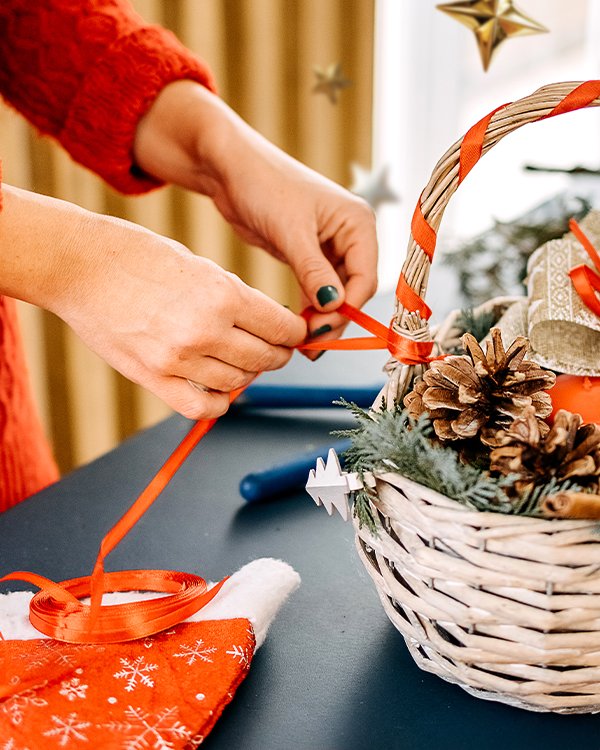&poi={$this.metadata.pointOfInterest.x},{$this.metadata.pointOfInterest.y},{$this.metadata.pointOfInterest.w},{$this.metadata.pointOfInterest.h}&scaleFit={$sfcenter}&sm=aspect&aspect=3:2&sfcenter=center&sfpoi=poi&qlt=50&fmt=auto&noiser=0&fmt.jpeg.interlaced=true&fmt.jp2.qlt=40&)
By Steven Smith | Date published: October 2026
A homemade hamper brings several smaller gifts together in one thoughtful package. To make one, choose a theme that suits the recipient, find a sturdy container, add protective filler, arrange the contents so everything can be seen, then finish it with wrapping and a gift tag.
While hampers traditionally used a wicker style basket, you can use any container that suits your recipient and the theme you’re going for. If it’s sturdy and big enough to display all the contents, you can make a hamper from a variety of types of container.
How to make a hamper in seven steps
Follow these seven simple steps and you’ll have the basics for creating the perfect hamper.
- Choose a theme based on the recipient’s interests.
- Set a spending limit for the container, gifts and wrapping.
- Pick a suitable container with enough room for every item.
- Add clean, protective filler to cushion and raise the gifts.
- Arrange larger items first, followed by smaller pieces.
- Secure anything fragile or likely to move.
- Add wrapping and a gift tag for the finishing touch.
What you need to make a hamper
Start by gathering the container, gifts and packing materials before you arrange anything. This makes it easier to check that the hamper is the right size and that you have enough filler to support and protect the contents.
- Container – You’ll want something large enough to be able to display all the contents, while being sturdy enough to protect everything inside. Options include decorative storage boxes, wicker style hampers and gift boxes.
- Filler – Think shredded paper, tissue or other soft materials that will help cushion the contents of your hamper.
- Gifts – You don’t need to go wild with the gifts. A simple selection of products tied together with a theme and personal to the recipient will make the hamper even more thoughtful.
- Wrapping – If you’re using a traditional hamper, you might not need wrapping as the hamper already has visual appeal. Otherwise, some nice gift wrap or a gift bag will be ideal.
- Gift tag – A great way to add a short, personal message for your recipient.
Avoid overfilling the hamper. The contents should be nice and secure inside the container and protected by the filling.
Hamper basket alternatives
While most people think about a wicker basket when they consider hampers, it’s an opportunity to be creative with your choice of container. A storage basket might work for homewares and toiletries, while a decorative box would work for books, stationary and smaller gifts. A nice, rustic style wooden crate for jarred products or gardening gifts or a serving tray for tea and coffee or breakfast themed hampers make a nice change. You could even go with a mixing bowl for baking and cooking themes or a large plant pot for gardening themes for something different.
How to choose a hamper theme
A theme makes it easier to choose items that feel connected. Start with something the recipient already enjoys, uses or has mentioned. Then select a few complementary gifts rather than filling the hamper with unrelated extras.
While the range of themes is broad, here are a few ideas to help inspire you:
- a cosy evening at home
- tea or coffee
- cooking or baking
- games night
- gardening
- self-care
- stationery
- new home essentials
- film night
- Christmas treats
- a new baby or family gift
- a favourite hobby
Keep your recipient in mind. Check dietary requirements before adding food or drink, avoid strongly scented products if you don’t know their preferences and make sure age-related products are appropriate.
What to put in a hamper
As a rule of thumb, aim for one or two main gifts, with a small selection of supplementary gifts that work nicely together as part of a theme. Take some time before buying to consider your recipient. What are their interests? Think about things they’ll appreciate and get benefit from and even consider if the container is something they might reuse. Get the container first as this will help you to see how much space you have without making the finished hamper feel crowded.
While the right gifts will vary by recipient, the following table will help give you some ideas by theme or the person you’re gifting to.
| Recipient or interest | Main gift idea | Supporting ideas |
|---|---|---|
Tea or coffee fan | Mug or travel cup | Tea, coffee, biscuits, coaster or teaspoon |
Home cook | Mixing bowl or kitchen tool | Recipe book, utensils, spices or tea towels |
Film fan | Film-themed gift or small screen accessory | Snacks, soft blanket, mug or trivia game |
Games night host | Board game or party game | Score pad, snacks, drinks accessories or playing cards |
Cosy night-in hamper | Jigsaw puzzle or fun activity | A mug, blanket, and snacks |
Gardener | Small gardening tool | Gloves, plant labels, notebook or plant pot |
Student | Desk accessory or travel mug | Stationery, storage, notebook or reusable bottle |
New homeowner | Useful kitchen or home item | Mug, tea towel, storage jar or small decorative item |
Reader | Book or reading accessory | Mug, bookmark, notebook or soft throw |
Child | Toy, book or creative activity | Pencils, stickers, puzzle or small game |
How to arrange and wrap a hamper
Arrange the hamper from the back forwards so that the gifts remain visible and supported. You may need to move things around a few times before the layout feels balanced.
1. Build a sturdy base
Add enough filler to cushion the bottom and lift smaller items into view. Keep the layer even so the gifts are stable in the container.
Use packing material that won’t transfer colour, scent or residue to the contents.
You could use:
- clean shredded paper
- tissue paper
- folded paper
- clean fabric
- small cardboard supports
- the product’s original protective packaging
The amount required will depend on the depth of the container and the size of the gifts. Use enough to support the contents rather than aiming for a fixed depth.
2. Position the larger items
Place taller or larger gifts towards the back. If the hamper will be viewed from every side, you could use the centre for the tallest item instead.
Keep heavier items low and well supported. You don’t want them resting on fragile items or compressing softer gifts.
If a large item keeps leaning, add support behind or beside it rather than relying on the wrapping to hold it upright.
3. Add medium and small gifts
Position medium-sized items around the main gift. Add smaller presents near the front or in visible gaps.
Turn labels or recognisable fronts towards the recipient where practical. This helps the hamper look organised and makes the contents easier to identify.
A gradual arrangement from taller items to smaller ones usually makes the contents easier to see.
4. Fill the gaps carefully
Use extra filler to limit movement. Small boxes or pieces of folded card can help separate hard or breakable items.
If there is a large empty space, consider repositioning the gifts or using a smaller container rather than filling it with unnecessary products.
5. Check that everything is secure
Look at the hamper from the front, sides and above. Check that:
- the theme is clear
- the main gift is easy to spot
- smaller gifts have not disappeared into the filler
- heavy products are supported
- fragile items do not touch each other
- labels and product information remain available
Move the hamper gently without tipping or shaking it. If anything slides, add support or reposition it.
How to wrap a hamper
The wrapping should keep the contents together without hiding all the work you’ve put into arranging them.
Choose an approach that suits the container:
- wrap a lidded box with gift wrap
- use a large gift bag for a soft or lightweight hamper
- wrap an open basket in suitable transparent wrapping
- cover a tray with paper or fabric and secure the contents separately
- place a smaller hamper inside a reusable tote bag
Make sure the wrapping does not place pressure on fragile items. If using transparent wrapping, gather it above the tallest item rather than pulling it tightly against the contents.
Add a tag with the recipient’s name and a brief message. If the hamper contains food, you could also add a simple contents card, but the original product packaging should remain available.
- Shop all gift wrap
Christmas hamper ideas
Hampers make a fantastic Christmas gift. You can assemble a hamper that plays into the festive season that you can gift ahead of Christmas Day. And Christmas doesn’t have to be the only theme either, read on for some festive inspiration.
Christmas film night hamper - Consider a cosy blanket, mugs, a small game and suitable packaged snacks.
Christmas morning hamper - A Christmas morning theme could include mugs, tea or coffee, packaged breakfast treats, a small game and something to read or do together.
Christmas baking hamper - Use a mixing bowl as the container, then add utensils, measuring tools, a recipe book and packaged baking ingredients.
FAQs about making a hamper
How can I make my own hamper?
Choose a theme that reflects the recipient’s interests, then set a spending limit and gather a container, filler, gifts and wrapping materials. Add filler to create a supportive base, position the largest items first and arrange smaller gifts towards the front. Fill any gaps so the contents do not move easily. Finish with suitable wrapping and a gift tag. Keep original packaging and any safety, ingredient, allergen or age information with the products. A storage basket can also form part of the gift.
What should I include in a Christmas hamper?
Choose a simple Christmas theme and include a small number of connected gifts. A film-night hamper might contain mugs, a soft throw, a game and packaged snacks. A baking hamper could use a mixing bowl as the container and include utensils, measuring tools and suitable ingredients. Check food preferences and allergens before buying edible items and keep all original labels attached. For other themes, browse gifts and occasions and prioritise items the recipient is likely to use.
What can I use instead of a hamper basket?
A decorative box, reusable storage basket, shallow crate, tray, mixing bowl, fabric storage cube or strong gift bag can all work. Match the container to the contents and make sure it can support their combined weight. For a bag or soft-sided container, add a firm base if needed. If the hamper contains fragile items, choose something rigid and use enough protective filler to limit movement. Explore decorative baskets and boxes for possible reusable options.
Is it cheaper to make your own hamper?
It can be, but the total cost depends on the container, contents, packing materials and any delivery costs. Making your own gives you control over the spending limit and lets you select only items that suit the recipient. Reusing a suitable box, basket or tray may reduce the cost of the container. However, separately purchased products and wrapping can add up. Compare the complete cost with a ready-made option before deciding, rather than comparing the gifts alone. Avoid buying unnecessary filler products simply to make the hamper look larger.
How do you make a hamper look well arranged?
Create an even base with clean filler, then place the tallest or largest item at the back. Add medium-sized gifts around it and keep smaller items towards the front. Turn the recognisable side of each product forwards where practical and use extra filler to close visible gaps and limit movement. Aim for a balanced layout without forcing every space to be full. Before wrapping, view the hamper from several angles and move it gently to check that everything remains supported.
What should I put in a food hamper?
Choose a theme such as tea and biscuits, coffee, baking, breakfast, savoury snacks or sweet treats. Include products the recipient can store and use comfortably and check their dietary preferences before buying. Keep food sealed in its original packaging so ingredients, allergens, storage instructions and date information remain available. Consider how long the hamper may be in transit or displayed before adding anything that needs refrigeration. The food and drink gifts category can provide broader inspiration.