
How to make a Christmas wreath
Make your own festive door or wall wreath for your home.
Shop all Christmas decorations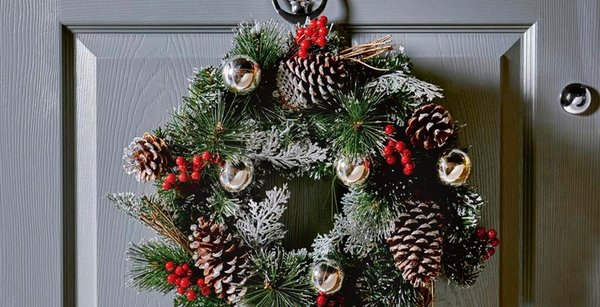&poi={$this.metadata.pointOfInterest.x},{$this.metadata.pointOfInterest.y},{$this.metadata.pointOfInterest.w},{$this.metadata.pointOfInterest.h}&scaleFit={$sfcenter}&sm=aspect&aspect=3:2&sfcenter=center&sfpoi=poi&qlt=50&fmt=auto&noiser=0&fmt.jpeg.interlaced=true&fmt.jp2.qlt=40&)
By Steven Smith | Date published: October 2026
How to make a Christmas wreath
A Christmas wreath is a lovely way to welcome the season, whether you hang it on your front door, style it above your fireplace or use it as a centrepiece for your festive table.
And the good news? You don’t need to be a crafting expert to make one. With a sturdy wreath base, a little greenery and a few simple decorations, you can create a wreath that feels personal to your home. Prefer something you can bring out year after year? Our ready-made faux Christmas wreaths and garlands make festive decorating simple too.
Quick answer: how do you make a Christmas wreath?
To make a Christmas wreath, start with a wire, straw, rattan or willow wreath base. Add moss or a padded base layer if you’re using fresh foliage, then attach small bundles of greenery with florist wire, overlapping each bundle as you move around the ring. Finish with decorations like pinecones, dried orange slices, baubles, berries or ribbon. Add a hanging loop before you display it and keep fresh wreaths cool and lightly misted to help them stay looking their best.
What you’ll need to make a Christmas wreath
Before you start, get everything ready in one place. Wreath making is much easier when your greenery, decorations and tools are close to hand.
Basic wreath making kit
Before you can start personalising and decorating your wreath, you'll need these basics to start assembling your wreath.
Greenery and natural materials
Fresh wreaths work well with evergreen foliage because it holds its shape and colour better than softer stems. You could use:
- Pine
- Fir
- Spruce
- Holly
- Ivy
- Eucalyptus
- Bay
- Rosemary
- Conifer clippings
If you’re foraging, only collect materials where you have permission and avoid taking too much from one place. Garden clippings are a great place to start, especially after winter pruning.
Christmas wreath decorations
This is where you can add your own personal touches to your wreath. You can add a mix of things such as:
- Pinecones
- Dried orange slices
- Cinnamon sticks
- Faux berries
- Small baubles
- Mini bells
- Ribbon or bows
- Battery-operated lights suitable for your chosen display area
- Small hanging decorations
Spread heavier decorations and ornaments as evenly as possible to help your finished wreath hang nicely on your door or wall.
How to make a Christmas wreath step by step
Step 1: choose your wreath base
Start with a base that fits the look you’re going for. A wire wreath base is a good choice for fresh foliage, especially if you want a full, traditional Christmas wreath where it won’t be seen. Rattan, willow and straw bases are ideal if you want a natural look or a simpler wreath where part of the base stays visible.
If this is your first time making your own wreath, choose a medium-sized base. It gives you enough room to add greenery, but it won’t take as long to fill as an oversized wreath.
Step 2: add a hanging loop
Before you dive into the fun part, decide which part will be the top. Tie a secure loop of twine, ribbon or wire around the base. This makes it much easier to hang later.
If you’re planning to use the wreath as a table centrepiece, you can skip this step.
Step 3: create a moss layer
If you’re making a fresh Christmas wreath, add damp moss to the base to help hold moisture. Place small handfuls of moss around the frame and secure them with florist wire. Keep wrapping the wire around the base until the ring is covered.
Try not to make the moss layer too bulky. You want enough to hold your foliage, but not so much that the wreath becomes heavy.
Step 4: prepare your greenery
Cut your greenery into short, manageable sprigs. Around 10 to 15cm is a practical size for most wreaths. Strip a few leaves or needles from the bottom of each stem so it’s easier to secure them to the base.
Lay your greenery in small piles by type. This helps you build balanced bundles as you work.
Step 5: make small bundles
Take three or four sprigs and arrange them into a small fan shape. Mix textures for a fuller look. For example, pair pine or spruce with ivy, eucalyptus or rosemary.
Place the first bundle onto the wreath base and wrap florist wire around the stems a few times. Keep the wire attached to the reel rather than cutting it after each bundle.
Step 6: overlap as you go
Add the next bundle so it slightly overlaps the stems of the first one. Keep working around the wreath in the same direction. This overlapping method hides the wire and gives the wreath a neat, full finish.
For a relaxed, natural look, vary the angle of each bundle slightly. For a more classic wreath, keep the bundles even and consistent.
Step 7: tuck in the final bundle
Once you’ve worked your way around the full wreath, lift the first bundle slightly and tuck the final stems underneath it. Wrap the wire securely at the back and trim away any excess.
Hold the wreath up and check the shape. If one area looks thinner, add small sprigs to fill the gaps.
Step 8: add your decorations
Now start adding your decorations. Wire larger pieces like pinecones, dried orange slices or baubles onto the wreath so they stay in place. Ribbon can be tied at the top, bottom or slightly off-centre, depending on your style. Add baubles in a range of sizes to add some variation to your wreath.
If you’re using lights, check they’re suitable for where you want to display the wreath and keep the battery pack easy to reach.
Christmas wreath size guide
Choosing the right size wreath depends on where you want to display it. A small wreath can add a nice touch to your indoor decor, while a larger wreath makes more impact on a front door.
| Wreath size | Best for | Good to know |
|---|---|---|
Small, around 20 to 30cm | Interior doors, shelves, cupboard doors or small wall spaces | Easy to make and lightweight |
Medium, around 35 to 45cm | Standard front doors, fireplaces or hallway mirrors | A useful all-round size |
Large, around 50 to 60cm | Wider doors, large walls or statement displays | Needs more foliage and a strong hanging point |
Extra-large, 60cm and above | Porches, garden walls or large open spaces | Best kept simple so it does not feel too heavy |
If you’re hanging a wreath on a door, leave enough space around the edges so the door can open and close without catching.
Christmas wreath ideas for every style
Traditional Christmas wreath
For a classic look, use evergreen foliage, holly, pinecones, red berries and a ribbon. This works beautifully on front doors, fireplaces and hallway walls.
Natural Christmas wreath
Use garden greenery, dried seed heads, ivy, rosemary, bay, pinecones and dried orange slices. This style feels relaxed and rustic, and it’s a lovely option if you want to use materials you already have.
Colourful bauble wreath
If you want something cheerful and bold, use baubles in a few colours that match your Christmas tree decorations. You can use a plain faux wreath as a base, then add baubles with wire.
Minimal wreath
Keep things simple with eucalyptus, pine and a plain velvet or satin ribbon. This works well indoors if you prefer a softer festive look.
Table centrepiece wreath
A wreath doesn’t have to go on a door. Lay it flat in the centre of your Christmas dining table and style it around a candle holder, lantern or bowl of baubles. If you’re using candles, keep flames away from foliage and decorations, and never leave lit candles unattended.
How to display your Christmas wreath
On your front door
Use an over-door wreath hanger, strong ribbon or a suitable removable hook. Check the wreath is secure and will not swing too much in the wind.
Indoors
Wreaths can bring festive detail to walls, mirrors, shelves, fireplaces and stairways. For indoor displays, lighter wreaths are often easier to hang. Faux wreaths are especially useful if you want something reusable.
On the Christmas table
Use a wreath as a centrepiece by laying it flat and styling it with battery-operated lights, baubles or a lantern. Keep enough space for serving dishes, glasses and place settings.
Seasonal wreath ideas beyond Christmas
Once you’ve made one wreath, you can adapt the same method for other seasons beyond Christmas.
Easter wreaths
Use pastel ribbon, faux flowers, greenery and decorative eggs for a spring look. A lighter rattan base works well here.
Autumn wreaths
Try dried leaves, pinecones, berries, seed heads and warm-toned ribbon. Autumn wreaths look lovely on doors, hallway mirrors and mantelpieces with deep red, brown and orange hues.
Everyday wreaths
For a simple year-round wreath, use eucalyptus, ivy, faux flowers or dried stems. Keep the decorations minimal so it works across different seasons.
How to look after a Christmas wreath
Fresh wreaths last longer when they’re kept cool and away from direct heat. Avoid placing them right above radiators, fires or in strong direct sunlight.
To help a fresh wreath stay looking its best:
- Mist the foliage lightly every few days
- Keep it outside or in a cool place where possible
- Remove any dry or tired-looking stems
- Replace loose decorations as needed
- Bring it indoors only when you want to use it, if it’s designed for outdoor display
Faux wreaths need less care. Give them a light dust, reshape any flattened foliage and store them carefully after Christmas.
FAQs about Christmas wreaths
How do you make a Christmas wreath in an easy way?
The easiest way to make a Christmas wreath is to start with a ready-made wire, rattan or faux greenery base. Add small bundles of greenery with florist wire, overlapping each bundle as you move around the ring. Once the base looks full, add decorations like pinecones, dried orange slices, ribbon or baubles. If you want to save time, use a plain faux wreath and personalise it with your own decorations.
What is the best base for a Christmas wreath?
The best wreath base depends on the finish you want. Wire bases work well for fresh Christmas wreath making because they can hold moss, foliage and decorations securely. Rattan and willow bases are good for natural or minimal wreaths, especially if you want some of the base to show. Straw bases are sturdy and useful for fuller designs. For speed, a plain faux wreath base can be decorated and reused.
What size wreath looks best on a front door?
A medium wreath, around 35 to 45cm, usually works well on a standard front door. It should feel noticeable without getting in the way when the door opens and closes. Larger doors, porches or wide entrances can often take a 50 to 60cm wreath. For smaller doors, flats or interior doors, a smaller wreath may look neater and be easier to hang securely.
How long will a homemade wreath last?
A homemade fresh Christmas wreath can last for a few weeks, depending on the materials used and where it is displayed. Outdoor wreaths often last longer because they stay cooler. Indoor wreaths may dry out more quickly, especially near radiators, fires or sunny windows. To help it stay fresh, mist the foliage lightly, keep it cool where possible and remove tired stems when needed.
What decorations can you put on a Christmas wreath?
You can decorate a Christmas wreath with pinecones, dried orange slices, cinnamon sticks, faux berries, baubles, bells, ribbon, bows or battery-operated lights. Natural decorations give a traditional look, while baubles and bows can help match your wreath to your Christmas tree. Keep heavier decorations evenly spaced so the wreath hangs straight, and check lights are suitable for where you plan to display them.
Is it cheaper to make a wreath or buy one?
It depends on what you already have. Making a wreath can be cost-effective if you use garden greenery, reusable decorations and basic tools you already own. Costs can rise if you need to buy a base, wire, foliage and decorative extras. A ready-made faux wreath may cost more upfront, but it can be reused year after year if stored carefully after Christmas.
Can I make a Christmas wreath without fresh foliage?
Yes, you can make a Christmas wreath without fresh foliage. Use a rattan, willow, wire or plain faux wreath base, then add faux greenery, baubles, ribbon, dried flowers, felt decorations or battery-operated lights. This can be a good option if you want a wreath that lasts longer indoors, needs less care and can be stored for future Christmases.
What is a traditional Christmas wreath?
A traditional Christmas wreath is usually a circular decoration made with evergreen foliage such as pine, fir, spruce, holly or ivy. It may include red berries, pinecones, ribbon and other festive details. The circular shape is often used as a seasonal welcome on front doors, but wreaths can also be displayed indoors on walls, fireplaces, mirrors or dining tables.