
Dining table buying guide
Big dinners or quick breakfasts? Find a dining table that fits your space, style and everyday life.
Shop all dining tables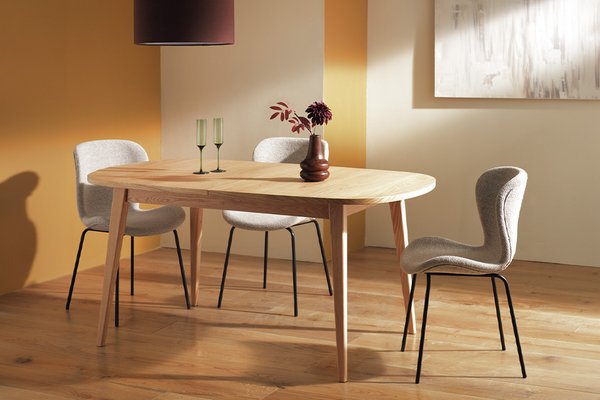&poi={$this.metadata.pointOfInterest.x},{$this.metadata.pointOfInterest.y},{$this.metadata.pointOfInterest.w},{$this.metadata.pointOfInterest.h}&scaleFit={$sfcenter}&sm=aspect&aspect=3:2&sfcenter=center&sfpoi=poi&qlt=50&fmt=auto&noiser=0&fmt.jpeg.interlaced=true&fmt.jp2.qlt=40&)
By Zara Flynn | Last edited: October 2026
A dining table is for much more than mealtimes. From homework and hobbies to board games, celebrations and even working from home, the right one should seat everyone comfortably and suit the way you use it day to day. Let's help you pick the right one.
Quick answer: how to choose a dining table
Start by measuring your room. Make sure there's enough space to pull out chairs and move around comfortably. Then, choose a seating capacity that suits your household and consider which table shape works best in the space you've got.
Always check for the dimensions in the product information. Extendable and folding tables offer added flexibility, while compact round or square designs can work well in smaller spaces. If you're ordering online, remember to check delivery access, assembly details and care instructions thoroughly.
How to measure the dining table
The first step when choosing the right dining table is to check its measurements. You don't want to end up with a dining table that looks amazing but fits awkwardly. Pull out the tape measure and check these measurements beforehand.
- Height: The distance from the floor to the tabletop.
- Length: The measurement along the longest edge of the table.
- Width: The measurement along the shorter side of the table.
- Diameter: The measurement across the centre of a round table.
- Extended length: If applicable, the total length of an extendable table when fully open.
- Under-table clearance: The available space between the floor, tabletop, frame and supports.
Have enough space around the table
As a practical starting point, aim to leave around 75 to 90cm between the edge of the table and nearby walls or furniture. This gives a person space to pull out a chair and move around the dining area. Be mindful to save additional space along a busy route, near a doorway or beside cupboards that open into the dining space. Always compare the table height with your chosen chairs, particularly if the chairs have arms or thick seat cushions.
Handy tip: Place temporary markers on the floor for your dining table and chairs using low-tack masking tape. This will help you visualise how they will fit into the room. Remember to mark the extended size if you are considering an extendable dining table.
How much space does each person need at the table?
For comfortable seating, consider the dimensions of both your dining table and dining chairs. For the table, allow 50 to 60cm of edge per person. But, keep in mind that chairs with wide armrests may need extra space and legs. This may affect where and how many chairs can fit. So, a table that seats six may not comfortably fit every set of six dining chairs. Measure your overall dining space, then pick your dining table and lastly the chairs that would fit well with it.
Dining table sizes and seating capacity
Dining table sizes can vary from one shape to another, even when they’re designed for the same number of people. Use seating labels and approximate measurements to narrow down your options, then always check the exact product dimensions to make sure the table will fit your space.
| Rectangular table length | Round table diameter | Seating capacity | Often suitable for |
|---|---|---|---|
70 to 90cm | 70 to 90cm | 2 people | Compact kitchens, flats and occasional dining |
110 to 140cm | 130 to 140cm | 4 people | Smaller households, every family meal |
160 to 200cm | 150 to 160cm | 6 people | Larger households and regular guests |
250 to 350cm | 190 to 200cm | 8 people | Larger rooms and frequent guests |
Choosing your dining table shape
The right table shape can make all the difference. Think about your room, the space you have and how you’ll use it to find your perfect fit.
Rectangular dining tables
Got a longer room or open-plan space? Rectangular dining tables offer plenty of room for family meals, entertaining and everyday life.
Shop rectangular dining tables
Round dining tables
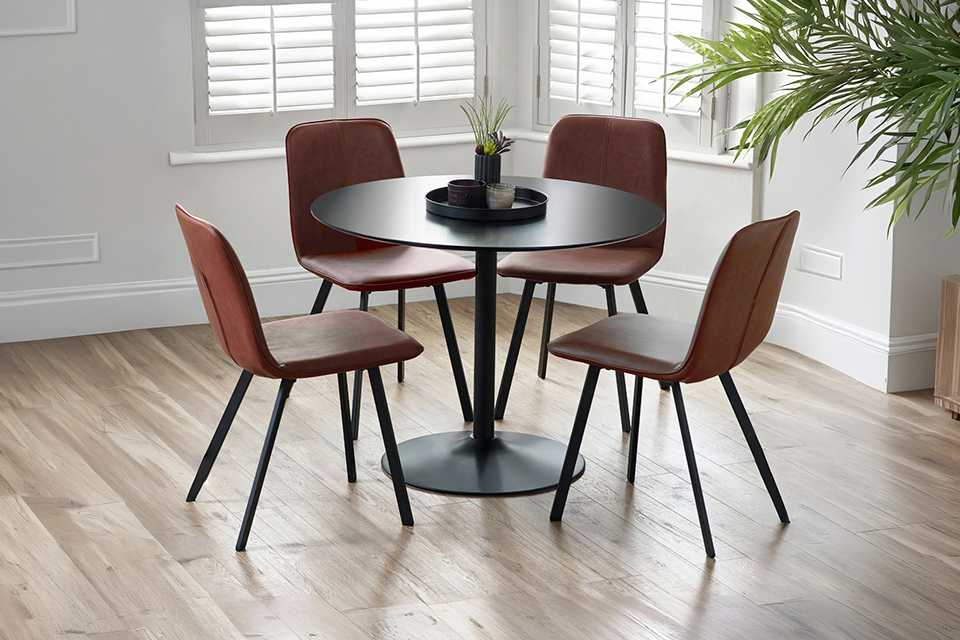
Short on space? Round dining tables work well in square or compact rooms, with no corners to get in the way. Plus, they’re great for bringing everyone together.
Square dining tables
Keep things neat and simple. Square dining tables are a natural fit for square rooms and smaller spaces, especially for two to four people. Just remember to leave room for chairs.
Oval dining tables
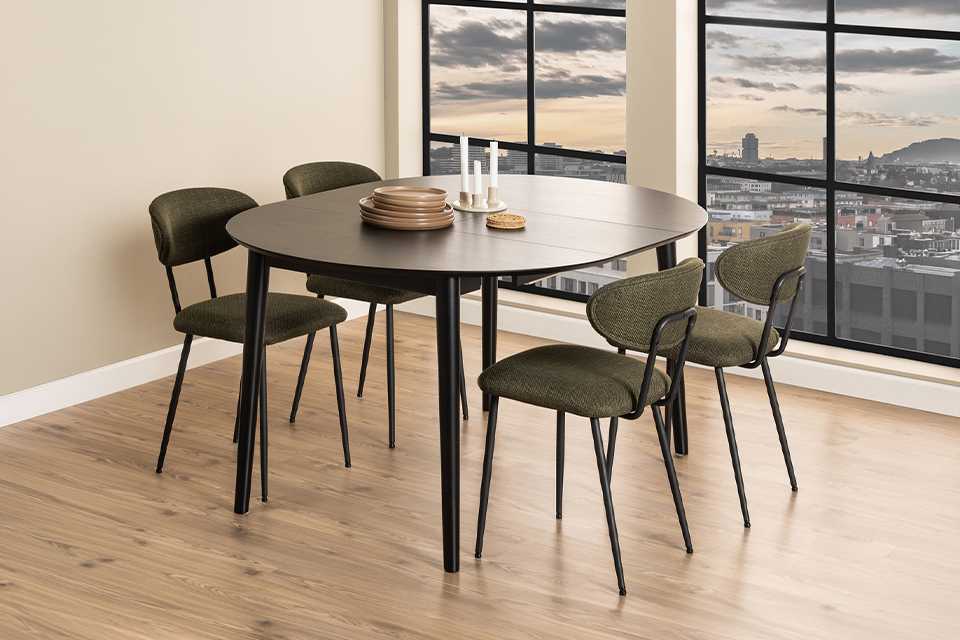
Want more seating with softer edges? Oval dining tables work brilliantly in longer rooms, giving you generous table space while being easier to move around.
How to choose between a fixed, extendable or folding dining table
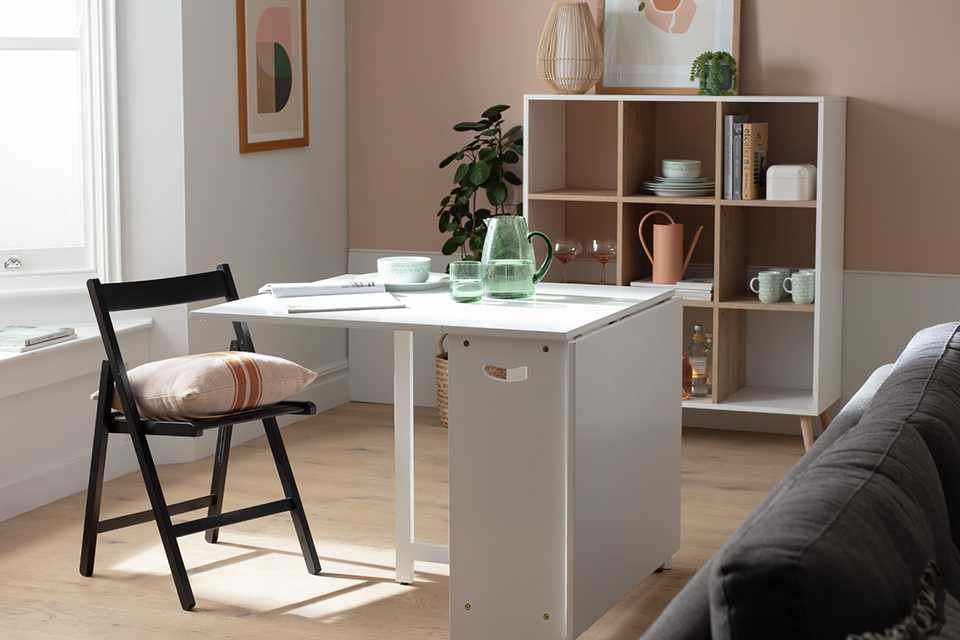
Once you've decided what shape works best for you, it's time to delve into other important details. How a dining table opens, closes or stores is just as important as how it looks. The right option will depend on your available space and how often you host people.
Choosing your dining table material
Dining tables come in a range of materials, each bringing a different look and feel to your space. From the natural character of wood to the contemporary finish of glass or ceramic, understanding the differences can help you find the right fit for your home.
Solid wood dining tables
Full of natural character. Solid wood dining tables have unique variations in grain and colour, so no two look quite the same.
Care tip:
- Wipe up spills promptly and use mats or coasters to protect against heat, moisture and marks.
- Make sure that the wood is oiled, lacquered or painted before using cleaning or care products.
Wood effect dining tables
Love the wood look? Wood-effect dining tables come in plenty of colours and finishes and can be lighter than solid wood options.
Care tip:
- Wipe spills promptly and avoid soaking the surface or using abrasive cleaners.
- Always check which cleaning products are suitable for the individual finish.
Glass dining tables
Keep things light and airy. Glass dining tables can make smaller spaces feel less crowded, although fingerprints and smudges may show up more easily.
Care tip:
- Clean with a soft cloth and avoid abrasive products that could scratch the surface.
- Use mats for very hot or cold items and follow the safety guidance for your particular table.
Metal dining tables
Going for a modern look? Metal dining tables and frames pair well with materials like wood, glass and ceramic. Check the feet or floor contact points to help protect your flooring.
Care tip:
- Dust with a soft, dry cloth and clean stubborn marks as recommended by the manufacturer.
- Wipe up spills and moisture promptly to help prevent rust, and avoid abrasive cleaners that could damage the finish.
- If rust appears, treat it promptly following the manufacturer’s care instructions to help prevent it from spreading.
Ceramic dining tables
Ceramic dining tables can bring a stone-inspired finish to your space. They can be heavy, so check the product weight and delivery access before ordering.
Care tip:
- Deal with spills promptly and use mats or coasters where recommended.
- Check the specific guidance for heat, stains and cleaning products, as different surfaces can need different care.
Choosing dining tables for small spaces
A smaller space doesn’t mean you have to compromise on a dining table. Make the most of the room you have by considering flexible, space-saving sets. Start with how many seats you use regularly, then think about how often you need extra seating for guests. Then choose what works best for your space.
- Consider a two-seater table or a compact round or square table for limited spaces.
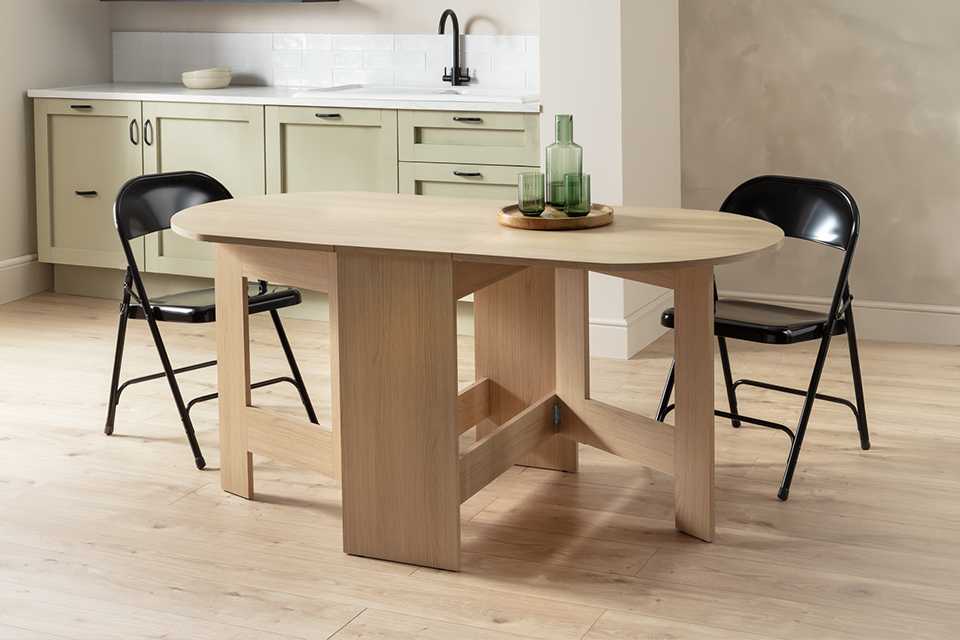
- Look for a drop-leaf, folding and extendable tables if you need more flexibility. They provide extra space when you have guests.
- Try benches or folding chairs to save space around the table. They can be moved or stored when not in use.
Top tip: Always check the table's full dimensions, especially extendable or drop-leaf designs to make sure there is still enough room to sit comfortably and move around when it's fully in use.
Shop dining tables by seats
Carousel
Shop popular dining tables
Slider Grid
- £99.00Free collection or delivery from £4.95
- £72.00Free collection or delivery from £4.95
- £99.00Free collection or delivery from £4.95










Dining table décor essentials
Carousel
Dining tables delivery and assembly
Before ordering, check that the dining table can be delivered safely into your home.
- Measure doorways, corridors, staircases and lifts, including any tight corners along the route.
- Compare these measurements with the packaged dimensions, and review the product’s weight and assembly guidance to see whether it will fit through the space without any hiccups.
- See whether you’ll need extra help moving it or whether it needs to be assembled in the room.
- If assembly is required, check the estimated assembly time, how many people are needed, the assembled dimensions and whether you’ll need any tools.
- Read our delivery and collection guide for more information
Frequently asked questions about dining tables
Can a dining table be used as a desk?
A dining table can provide an occasional place for working, studying or household admin tasks. A rectangular table usually offers space for a laptop, notebook and other essentials, while an extendable table may give more room when needed. For occasional use, check that the chair and table height feel comfortable and that there is enough legroom beneath the frame. If you work at the table regularly or for long periods, consider whether a dedicated desk and adjustable office chair would provide a more suitable setup.
How wide is a dining table in the UK?
Dining table width varies by shape and design, so there is no single standard measurement. Many rectangular dining tables are wide enough for place settings on both sides with serving space in the middle, but the product dimensions should always be checked. Measure the room as well as the tabletop and allow around 75 to 90cm outside the table edge where possible for chairs and movement. If the room is narrow, compare compact rectangular, oval and drop-leaf designs rather than choosing by seating capacity alone.
What is the typical size of a 6-seater dining table?
A rectangular 6-seater dining table may be around 150 to 180cm long. A round table for six may measure around 120 to 140cm in diameter. These figures are approximate because the tabletop shape, chair width and position of the legs all affect the usable seating space. Check the manufacturer’s stated dimensions and recommended seating capacity before ordering. It can also help to mark the full table and chair area on the floor so you can test how the room will work.
What should you look for when buying a dining table?
When buying a dining table, consider the following factors:
- Start with the table’s dimensions, seating capacity and the clearance available around it.
- Then consider the shape, surface material, position of the legs and whether you need a fixed or extendable design.
- Check that your chosen chairs will fit beneath the tabletop and between its supports.
- You should also review delivery access, package dimensions, assembly requirements and product care instructions.
- If the table will be used for homework or occasional home working, make sure it provides enough surface space and comfortable legroom for those activities too.
Which dining table shape is best for a small space?
Round, square, folding and drop-leaf dining tables can all work in a small space. The best option depends on the room’s shape, the number of seats you need and the routes people use to move through the room.
- A round table has no corners, while a square table may fit neatly against a wall.
- A drop-leaf or folding design can take up less room when it is not fully in use.
See where you can accommodate the dining table in your room, and based on that it will be easier to pick a shape that fits well in a small space.