
Sand and water toys for kids
Bring the fun of the beach to your garden with sand and water tables and toys.
Shop all sand and water toys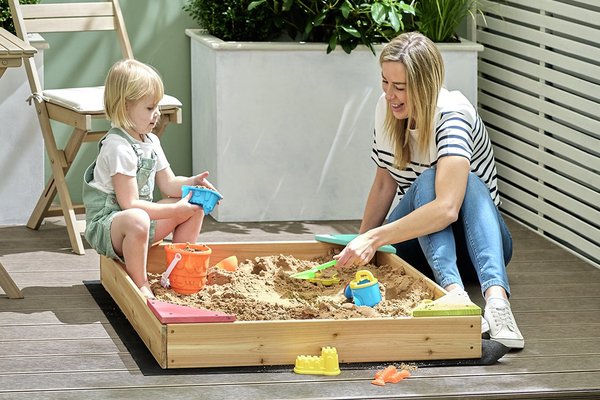&poi={$this.metadata.pointOfInterest.x},{$this.metadata.pointOfInterest.y},{$this.metadata.pointOfInterest.w},{$this.metadata.pointOfInterest.h}&scaleFit={($this.metadata.pointOfInterest.x>0)?$sfpoi:$sfcenter}&sm=aspect&aspect=3:2&sfcenter=center&sfpoi=poi&qlt=50&fmt=auto&noiser=0&fmt.jpeg.interlaced=true&fmt.jp2.qlt=40&)
By Steven Smith | Date published: July 2026
Sand and water toys bring all of the fun of the beach to your garden or outdoor space. From water tables filled with splashing, pouring and drenching fun to sandpits that your children can build epic sandcastles in or dig for treasure, they can explore textures, materials and their creativity where only their imaginations are the limit.
Whether you’re looking for a compact sand and water table, a larger sandpit, or accessories like buckets, spades and play sand, this guide can help you choose the right setup for your child.
What are sand and water toys?
Sand and water toys are outdoor play items designed for scooping, pouring, digging, splashing and building. They include sand and water tables, sand pits and play sand, and sand toy sets including buckets, spades, moulds and other toys.
Some designs have one play area, while others have separate sections for sand and water. A dual-sided sand and water table can be useful if your child enjoys mixing different types of play, while a sand pit with a lid can help protect the sand when it is not being used.
What should you look for?
Choose a sand or water toy that suits:
- Your child’s age: Always check the product age guidance.
- Your outdoor space: A small water table or tray can work well on patios and compact gardens.
- Storage needs: Look for lids, covers or stackable designs if space is limited.
- Cleaning: Smooth, easy-to-rinse surfaces can make tidy-up easier.
- Supervision: Children should always be supervised around water and during outdoor play. The Royal Life Saving Society has advice on how to have fun and stay safe around water in the garden.
Benefits of sand and water play
Sand and water play gives children the chance to explore, experiment and create using simple materials. With no rules or restrictions, children can enjoy play however they like, only bound by their imagination.
Supports sensory play
Sand can be dry, damp, loose or packed down, while water can be poured, splashed or moved through funnels and channels. Children will have fun creating, making a mess and splashing around while learning how different materials interact. For more sensory play, check out our range of sensory toys.
Promotes fine motor skills
Using buckets, spades, scoops, moulds and water wheels can help children practise hand movements. Filling a bucket, patting down sand or pouring water into a tray all involve control, coordination and grip. Learn more about STEM toys with our helpful guide.
Encourages imaginative play
A sand table can become a building site, a beach, a dinosaur dig or a mini garden. A water table can become a harbour, car wash or pouring station. These simple setups give children room to make up their own games and stories.
Good for solo or shared play
Sand and water tables offer plenty of opportunities for solo imaginative play, as well as group play with friends or family.
Choosing the right sand and water toy for you
For smaller spaces a compact sand or water table is ideal; something you can lift and put away easily, or store out of the way. Consider a combined sand and water table for maximum flexibility. Plastic sand and water pits are also a great option. Most come with a base and lid that can both be used, one for sand and one for water, and are easy to store.
For larger outdoor spaces a larger sand and water table where children can play together around it is a great option. Larger sand pits that act as an activity centre are also great options to allow creative and active play.
Where space is available, you can create a summer wonderland for children with the addition of a paddling pool, slides and even climbing frames and swings to create hours of outdoor fun.
Sand pits, sand tables and water tables compared
| Toy type | Good for | Things to consider |
|---|---|---|
Water table | Pouring, splashing, floating toys and using water wheels or funnels. | Needs emptying after use. Children should be always supervised around water. |
Sand table | Digging, scooping, moulding and building at a comfortable standing height. | Check the recommended play sand and keep it covered when not in use. |
Sand and water table | Mixed sensory play with separate areas for wet and dry activities. | Useful for compact spaces but check dimensions before buying. |
Sand pit with lid | Larger digging and building play in the garden. | A lid or cover can help protect the sand between play sessions. |
Safety tips for sand and water play
Sand and water play should always be supervised. Water can be risky even in small amounts, so it is important to stay close, avoid distractions and tidy away safely after use. RLSS UK advises keeping children within arm’s reach when they are in or near water, emptying paddling pools after use, and turning over containers so they cannot refill with rainwater.
Before play
- Check the toy is suitable for your child’s age.
- Place the toy on a stable, level surface.
- Read the product instructions and warnings.
- Get towels, spare clothes and toys ready before water play starts.
- Use play sand that is intended for children’s sand pits or sand tables. Don’t use building or craft sand or any sand of unknow origin. It’s safer to buy new children’s play sand than risk using unmarked sand.
During play
- Stay close and always supervise children.
- Keep young children within arm’s reach around water.
- Do not rely on older children to supervise younger ones.
- Encourage children not to throw sand.
- Keep drinking water separate from play water.
After play
- Empty water from tables, trays, buckets and containers.
- Turn over empty containers so they don’t collect rainwater.
- Cover sand pits or sand tables where a cover is provided.
- Rinse accessories and leave them to dry.
- Store loose toys safely to reduce trip hazards.
Sand and water play ideas
The beauty of water and sand play is that the options are near limitless. A few simple toys and household-style play prompts can help children explore in different ways.
- Scoop and pour station - Set up cups, buckets, funnels and scoops so children can move water from one container to another. This works well with a water table or water tray.
- Sandcastle building - Use buckets, spades and moulds to build towers, castles and shapes. Slightly damp play sand can be easier to shape than very dry sand.
- Mini treasure dig - Hide chunky, age-appropriate toys in the sand and let children dig to find them. Keep items large enough for your child’s age and always supervise play.
- Floating and sinking play - Use safe, age-appropriate toys to explore what floats and what sinks in a water table. Keep the activity simple and stay close throughout.
- Small world play - Add toy vehicles, animals or figures to create a building site, beach scene or harbour. A sand and water table with separate sections can work well for this.
- Water painting - Give children a bucket of water and a large paintbrush so they can “paint” fences, paving stones or outdoor toys with water. This is a low-mess option for warm days.
FAQs on Sand and Water Toys
What age can kids use a water table?
The right age depends on the specific water table, so always check the product guidance before buying. Some children’s water tables are listed as suitable from 18 months or 24 months, while others may have different recommendations depending on size, height and accessories. Children should always be supervised during water play, even when the water is shallow.
What are the benefits of a sandpit with a lid?
A sandpit with a lid or cover can help protect the play sand between uses. It can help keep leaves, rain and garden debris out, depending on the design. A lid can also make the sandpit feel tidier when it is not being used. You should still check the sand regularly, follow the product care instructions and replace play sand when needed.
Are sand pits worth it?
A sand pit can be worth considering if your child enjoys digging, building and imaginative outdoor play. It gives them a dedicated space for sensory play and can work well with simple toys like buckets, spades and moulds. Before buying, think about your garden size, where the sand pit will sit, whether it has a lid or cover, and how easy it will be to clean and maintain. Always check the age guidance and supervise children during play.
What exactly is a sand table?
A sand table is a raised play table that can be filled with play sand. It lets children dig, scoop, pour and build while standing or sitting at a comfortable height. Some sand tables are part of a sand and water table, with one section for sand and another for water. This can be useful for smaller outdoor spaces because it keeps play contained and easier to tidy away after use.
What is the best sand for a sand table?
Use play sand that is designed for children’s sand pits, sand tables or outdoor play. This is different from building sand, which should not be used unless the manufacturer says it is suitable for children’s play. Always follow the instructions on both the sand packaging and the sand table. Keep the sand covered when not in use and check it regularly so play stays clean and suitable.
Can babies use a sand pit?
Always follow the age guidance on the sand pit, sand table or sand and water toy you are buying. Some products may be suitable from 12 months, while others are designed for older children. Babies and toddlers should always be closely supervised, especially because sand and water play can involve small accessories, splashing and messy play. If you are unsure, choose a product that clearly matches your child’s age and stage.
What are the benefits of sand and water play?
Sand and water play can support sensory exploration, imaginative play and hands-on movement. Children can practise scooping, pouring, filling, emptying, digging and building, which all use coordination and control. It can also encourage open-ended play because there is no single right way to use the materials. Keep activities simple, use age-appropriate toys and supervise throughout, especially when water is involved.
How do you keep sand and water toys clean?
Empty water from tables, trays, buckets and containers after each play session. RLSS UK also advises turning over containers so they cannot refill with rainwater. Rinse accessories, let them dry and store them somewhere clean. For sand toys, remove visible debris and cover the sand pit or sand table when not in use if a cover is provided. Always follow the product’s care instructions.
Which is better, a sand pit or a sand and water table?
A sand pit usually gives children more space for digging and building, so it can suit larger gardens. A sand and water table is often more compact and can offer two types of play in one setup. If you have limited space, a table or tray may be easier to store and clean. If your child loves big digging play, a sand pit may be a better fit.